
Blue lotus
Nymphaea nouchali Burm. f.
Description
Growing requirements
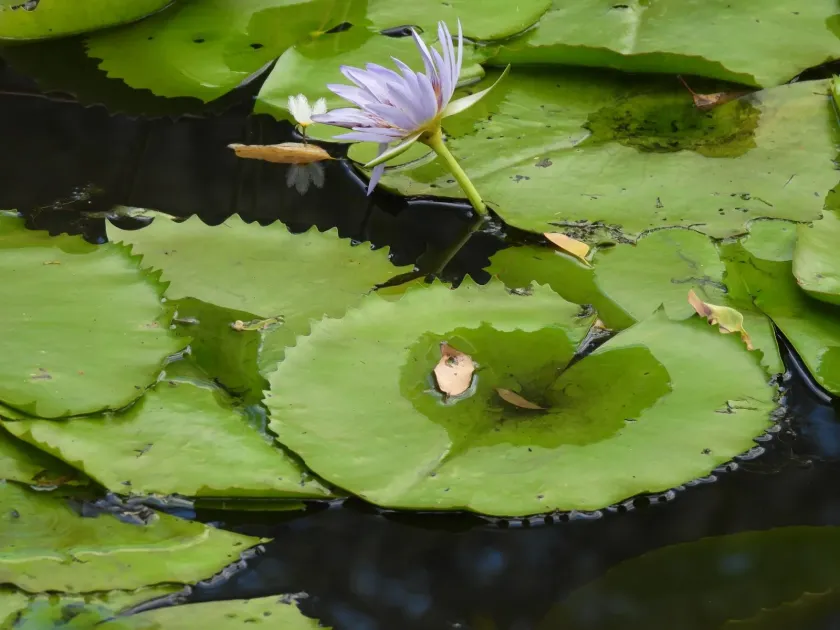
Blue lotus (Nymphaea nouchali), often referred to as the star lotus, is a perennial aquatic plant belonging to the Nymphaeaceae family. Originating from tropical Asia, this species is widespread in still or slow-moving water bodies, serving as an important element of wetland ecosystems.
The plant features distinct submerged rhizomes and long petioles that support floating, serrated-edged leaves. Its flowers are highly prized for their star-like symmetry, featuring petals that range in color from deep violet to pale blue or white, providing a striking visual effect.
Cultivation requires a tropical climate with water temperatures consistently maintained between 22 and 30 degrees Celsius. The species is heliophilic, demanding high levels of solar radiation to stimulate flowering and maintain the vigor of the floating foliage.
Proper soil management is critical, requiring a nutrient-rich substrate, preferably a heavy clay loam enriched with organic fertilizers. When planting, the rhizome must be securely anchored in the container to prevent floating, with the water depth adjusted according to the specific growth stage.
Beyond its ornamental value in landscaping and water gardens, the blue lotus holds significant cultural and medicinal importance. It is used in various traditional systems of medicine and is occasionally processed for its edible seeds and rhizomes in regional food systems.
Main diseases and pests
Common pests include the water lily beetle, which feeds on the leaves and can significantly reduce the photosynthetic capacity of the plant. Monitoring and manual removal are the standard practices in aquatic plant management to prevent infestation spreading across the pond.
Fungal diseases, including leaf spots and root rot, are usually triggered by poor water quality or excessive stagnant conditions. Maintaining clean water circulation and preventing over-fertilization are the primary methods for ensuring plant health and preventing pathogen buildup.