
Cape water lily
Nymphaea capensis Thunb.
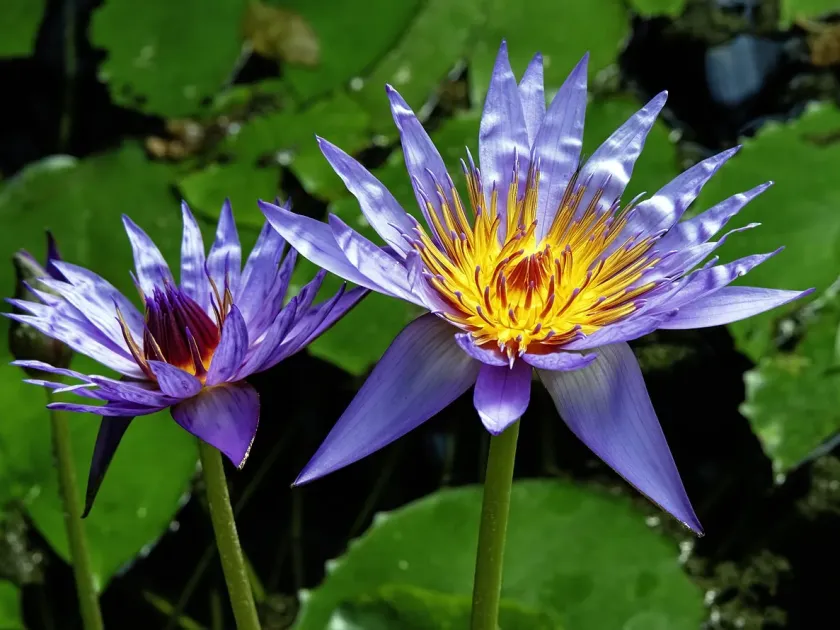
Description
Sowing dates
Propagation of the Cape water lily (Nymphaea capensis) is effectively achieved through seed germination in controlled warm water or by dividing established rhizomes.
Seeds should be sown in nutrient-rich substrates, such as aquatic soil or silt, ensuring the water temperature remains constant between 25°C and 28°C for successful germination.
When using vegetative propagation, the rhizome must be carefully divided into sections, ensuring each piece contains viable growth buds to facilitate rapid establishment.
Optimal planting depth typically ranges from 30 to 80 cm, allowing the foliage to reach the water surface without undue stress on the stem structure.
The best season for propagation and transplanting is during the spring months, once the water has warmed sufficiently to support the plant's metabolic needs.
Growing requirements
As a member of the Nymphaeaceae family, Nymphaea capensis is a tropical species that thrives in stagnant or slow-moving water bodies with high solar exposure.
The plant requires significant sunlight, preferably full sun, to support its prolific blooming cycle and the healthy development of its characteristic leaves.
For container-grown specimens, a heavy loam-based soil enriched with organic fertilizers is essential to provide long-term nutrient availability for the rhizome.
Water quality parameters, such as pH levels and dissolved mineral content, should be monitored to ensure they remain within the neutral to slightly acidic range.
This species is non-hardy and requires a stable, warm climate year-round; it cannot withstand freezing temperatures and is typically managed as a perennial in tropical or greenhouse settings.
Main diseases and pests
Common pests affecting the Cape water lily include water lily aphids, which congregate on the undersides of leaves and on unopened buds, causing structural damage.
Fungal infections, such as leaf spot or various rot pathogens, may occur if the water quality deteriorates or if there is insufficient aeration in the pond.
Certain aquatic mollusks, specifically large snail populations, can consume young leaves and damage the crown, significantly impacting the health of the plant.
Rhizome rot is a frequent issue resulting from waterlogged or overly compacted substrates that lack proper oxygenation, leading to plant decline.
Integrated pest management strategies are recommended, focusing on maintaining clean water conditions and removing decaying organic matter to prevent outbreaks.