
Nuxia oppositifolia
Nuxia oppositifolia
Description
Growing requirements
Nuxia oppositifolia is an evergreen woody species belonging to the Scrophulariaceae family. It naturally inhabits riverine environments and wetlands across subtropical and tropical Africa, often serving as a key component of riparian vegetation systems.
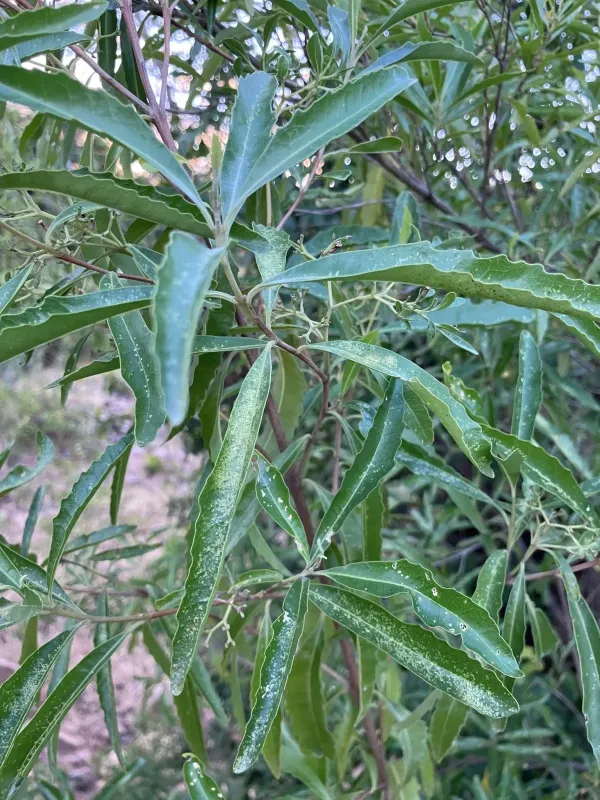
The plant is biologically distinguished by its opposite, lanceolate leaves and terminal clusters of delicate, nectar-rich flowers. It usually reaches a height of up to 10 meters, displaying a dense canopy that provides significant shade and supports local biodiversity in its native range.
The climatic requirements for this species are strictly oriented towards warm, humid conditions. It thrives in full sun exposure but is sensitive to frost and extreme cold. Adequate irrigation is crucial, as the plant is adapted to moist, well-drained alluvial soils along watercourses.
Regarding soil, Nuxia oppositifolia prefers nutrient-rich substrates that allow for healthy root development. While it is quite adaptable, waterlogging can be detrimental; therefore, choosing sites with efficient natural drainage or improving soil structure before planting is recommended for optimal growth.
In terms of practical application, this plant is primarily valued for ornamental purposes and ecological restoration. Its wood is hard and durable, traditionally used for small carpentry projects or tool handles. It also serves as a host plant for various insects, contributing positively to local ecosystem health.