
Common bride's bush
Nuxia congesta
Description
Growing requirements
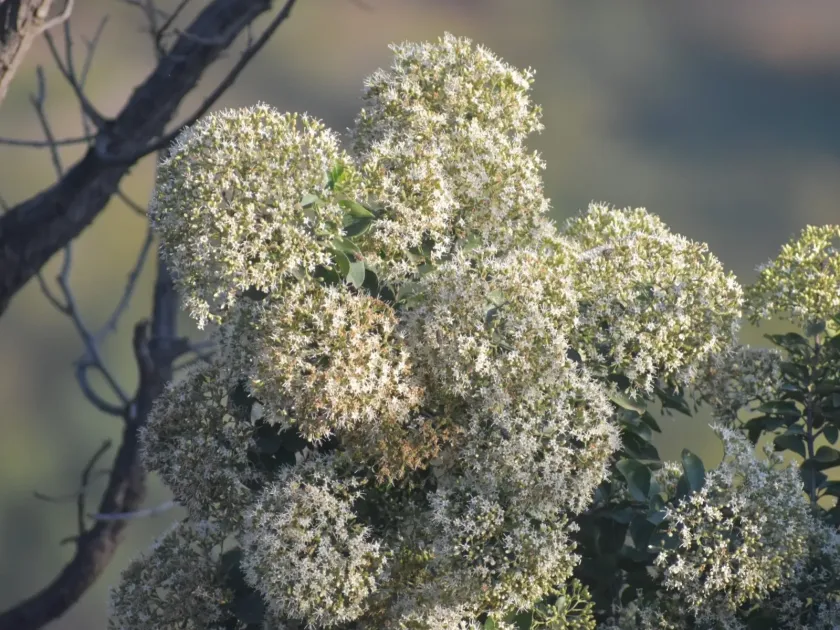
Nuxia congesta, commonly known as the common bride's bush, is an evergreen tree or large shrub belonging to the Stilbaceae family. It is widely recognized for its dense foliage and distinct, clustered flowering patterns which contribute to its ornamental and ecological value.
Native to tropical Africa, this species thrives in a variety of environments, ranging from montane forests to woodland margins. It displays remarkable resilience, often colonizing disturbed areas and acting as a pioneer species in forest regeneration projects.
For optimal growth, the species requires well-drained soils and exposure to full or partial sunlight. While it is adaptable to different soil compositions, deep and nutrient-rich soils generally result in significantly more robust vegetative growth.
The cultural requirements are relatively low, making it a sustainable choice for agroforestry systems. It is capable of enduring moderate drought conditions once established, although consistent moisture is preferred for high-growth stages.
Beyond its ecological benefits, the tree is harvested for its durable wood, which is traditionally utilized in crafting household tools and small-scale construction. Additionally, its nectar-rich flowers make it a vital component in local apiculture, supporting honeybee populations.