
Noronhia emarginata
Noronhia emarginata
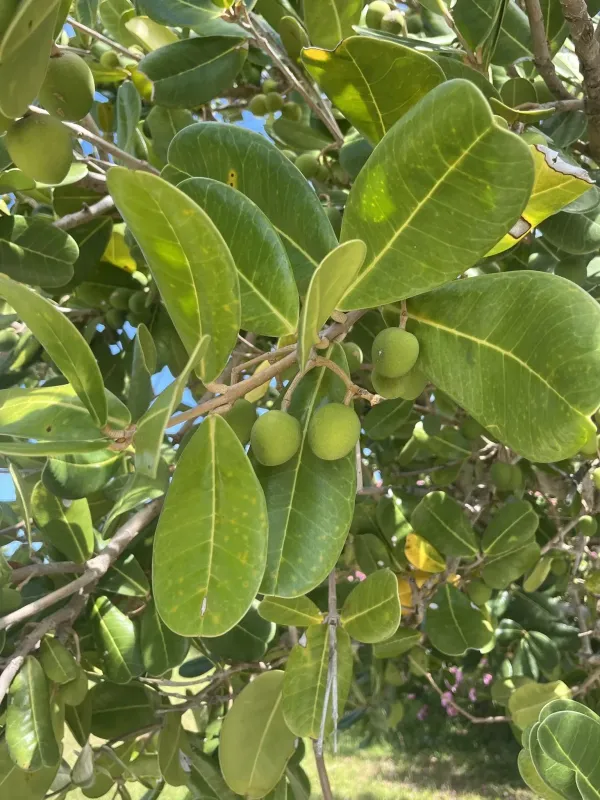
Description
Growing requirements
Noronhia emarginata, commonly known as Madagascar olive, is an evergreen tree belonging to the Oleaceae family. It is recognized for its dense, glossy foliage and its ability to produce edible drupes, making it both an ornamental and a productive agricultural species.
This tree is native to tropical climates and is highly sensitive to frost. It thrives in regions with consistent temperatures and requires protection from cold snaps that can damage its canopy and significantly retard its growth rate.
Regarding soil preferences, it performs best in well-drained, fertile substrates with a slightly acidic to neutral pH. While it is adaptable to different soil types, consistent moisture availability is necessary to maintain high vigor throughout the growing season.
Sunlight exposure is a critical factor for the development of Noronhia emarginata. It prefers full sun or light shade, with full sun exposure being ideal to stimulate maximum fruit set and maintain the compact, lush structure of the tree's canopy.
Proper irrigation management is essential, especially during the establishment phase. While the tree shows some resilience, avoiding waterlogged conditions is paramount to prevent root rot and ensure the overall health of the specimen in commercial orchard settings.
Yield
The fruit of Noronhia emarginata is oval-shaped and contains a sweet, fleshy pulp. In its native and introduced range, the fruit is consumed fresh or used in various culinary applications, including preserves, jams, and traditional snacks.
Beyond its culinary utility, the tree is appreciated for its hard and durable wood, which has been historically used for small-scale construction and artisan projects. This dual-purpose utility adds value to the cultivation of the species.
Yields are generally moderate and become more predictable as the tree matures. Pruning plays a significant role in managing yield, as it improves light penetration to the inner branches, which is necessary for uniform fruit development and ripening.
The harvest period often spans several months, as the drupes do not ripen simultaneously across the entire tree. Harvesting is typically done by hand, ensuring that only the fully mature fruits are collected for the market.
As the demand for exotic fruits grows, Noronhia emarginata is gaining interest as a specialty crop. It is well-suited for small-scale sustainable agriculture systems where low-input management and high-quality fruit production are desired.
Main diseases and pests
The primary pests affecting Noronhia emarginata include scale insects and mealybugs, which tend to congregate on the undersides of leaves and on stems. These pests can be effectively managed with horticultural oils or insecticidal soaps if detected early.
Fungal leaf spot diseases may occur in environments with high humidity and poor air circulation. Providing adequate spacing between trees and performing timely pruning are effective cultural strategies to mitigate these fungal issues throughout the year.
While generally robust, the root system can be susceptible to soil-borne pathogens if the drainage is insufficient. Ensuring the site selection includes proper soil aeration is the most effective preventative measure against such underground threats.
Environmental stress, such as intense heat waves or severe storms, can occasionally cause leaf drop or branch breakage in younger trees. Staking and windbreaks are recommended in exposed orchard locations to provide necessary structural support.
A comprehensive integrated pest management (IPM) program, focusing on regular monitoring and sanitation, is sufficient to keep Noronhia emarginata healthy and productive without relying on excessive chemical treatments.