
Neyraudia arundinacea
Neyraudia arundinacea
Description
Growing requirements
Neyraudia arundinacea is a perennial grass species belonging to the Poaceae family. Known for its robust growth, this plant forms dense tufts and possesses a physiological structure adapted to survive in various challenging tropical and subtropical environments.
The native range of this species covers parts of South and Southeast Asia, where it thrives in open areas, hillsides, and riverbanks. It has evolved to colonize areas with poor soil quality, demonstrating a remarkable ability to extract nutrients from depleted or sandy substrates.
Climate requirements for this culture center on high solar radiation and consistent temperatures. It is notably drought-tolerant, which makes it a viable candidate for land restoration in areas prone to seasonal water shortages where traditional cereal crops might fail to establish.
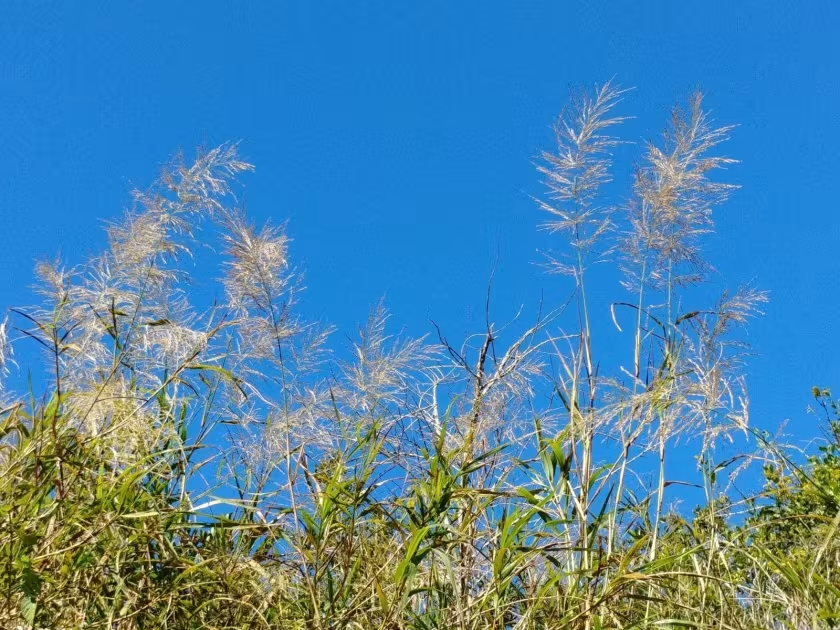
From a botanical standpoint, the plant is characterized by tall, rigid culms and long, slender leaves. The root system is extensive and deep, providing excellent soil anchorage and making the plant highly effective in erosion control programs on sloping agricultural lands.
The primary economic use of Neyraudia arundinacea is as a source of fiber. It is utilized in the production of pulp for the paper industry and as a raw material for traditional handicrafts. Its biomass also has potential applications in bioenergy production due to its high cellulose content.
Main diseases and pests
Like many tropical grasses, Neyraudia arundinacea can be susceptible to rust fungi during periods of high humidity and rainfall. Proper field management, including ensuring sufficient plant spacing to allow for airflow, is crucial for maintaining the health of the crop stand.
Pest threats primarily include grasshoppers and certain lepidopteran larvae that target the foliage. Integrated pest management strategies, focusing on biological control and crop rotation, are recommended to maintain yield levels without excessive chemical usage.