
New Zealand flax
Phormium tenax J. R. Forst. & G. Forst.
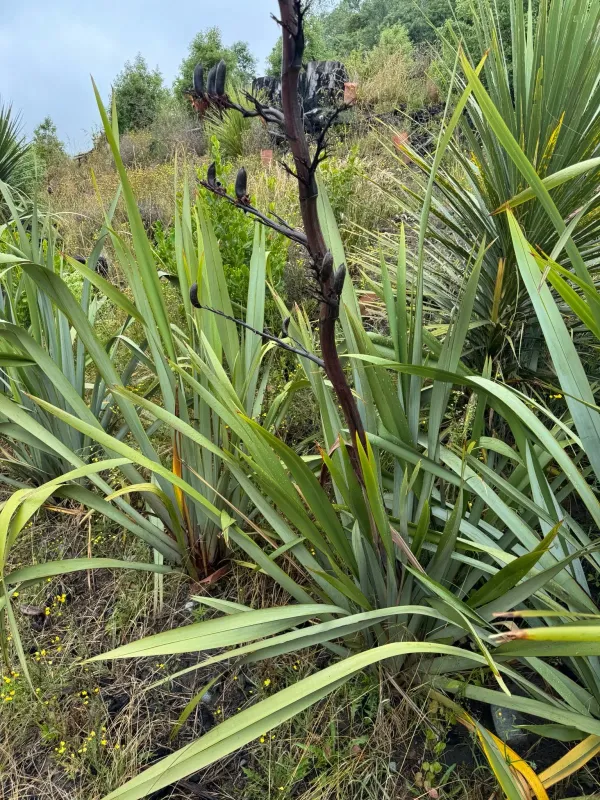
Description
Sowing dates
Phormium tenax, commonly known as New Zealand flax, can be propagated through seeds or, more commonly, by the vegetative division of rhizomes. Seeds should be sown in a well-drained, sterile potting medium at a temperature range of 20–22 degrees Celsius.
Germination can be slow and sporadic, necessitating a consistent moisture level throughout the incubation period. Once seedlings develop their second set of true leaves, they should be transplanted into individual containers to ensure adequate root development.
For commercial plantation, vegetative propagation is the gold standard. Dividing established, healthy clumps allows for the rapid establishment of uniform crops that maintain the desirable fiber traits of the parent plant.
Division is best performed during the onset of the growing season, ensuring that each rhizome section has a sufficient root mass and leaf buds to support new growth immediately upon planting.
Fields should be prepared by deep plowing and thorough weeding prior to planting, as the slow-growing young plants are highly sensitive to weed competition during their first year of establishment.
Growing requirements
Belonging to the Asphodelaceae family, Phormium tenax is native to New Zealand and Norfolk Island. It is a large, hardy perennial that forms dense clumps of sword-shaped leaves, which can reach heights of up to 3 meters.
This crop thrives in deep, fertile, and moist soils that offer excellent drainage. While it is adaptable, it performs poorly in waterlogged soils or extremely sandy substrates where nutrient leaching is prevalent.
The ideal climate for this species is a mild, coastal environment with minimal temperature fluctuations. It is generally frost-tender, and while mature plants can survive mild frosts, extreme cold can lead to significant biomass loss.
Phormium tenax requires ample sunlight to maximize fiber production. High light intensity encourages the development of stiffer, more resilient leaves, which are the primary source of the plant's valuable commercial fiber.
Routine nutrient management, specifically applying balanced nitrogen-phosphorus fertilizers, is essential to sustain the high biomass yields expected from industrial-scale plantations.
Yield
The primary economic output of Phormium tenax is its long, robust leaf fiber, historically used for ropes, textiles, and matting. Yields are heavily dependent on the age of the plantation and the density of the planting grid.
A harvestable yield is typically not achieved until the third or fourth year after planting, allowing the rhizomes to mature and form robust leaf rosettes. Productive plantations can remain viable for over a decade.
Harvesting is a selective process where mature leaves are cut from the outer periphery of the clump, leaving younger, central leaves intact to ensure continuous regrowth and long-term sustainability of the harvest.
The fiber yield per hectare is influenced by soil quality and irrigation practices. Proper plantation management can produce multiple tons of high-quality green leaf biomass annually.
The ratio of fiber to raw green weight is a critical metric for producers, typically ranging between 10% and 15% depending on the specific cultivar and the efficacy of the extraction equipment.
Main diseases and pests
While relatively hardy, Phormium tenax can be susceptible to root and crown rot when grown in poorly drained soils. Managing soil moisture is the primary preventive measure against fungal pathogens that can decimate a clump.
Pests such as mealybugs and scale insects often reside at the base of the leaves where they are shielded from environmental exposure. These pests extract plant sap, weakening the foliage and reducing fiber quality.
Leaf-chewing caterpillars can cause mechanical damage, creating entry points for opportunistic pathogens. Regular monitoring is necessary to identify and treat infestations before they become systemic across the plantation.
Cultural control methods, such as maintaining appropriate spacing between plants and removing dead or diseased foliage, are the most effective ways to promote air circulation and disease prevention.
In cases of severe infestation, integrated pest management (IPM) practices should be employed, prioritizing the use of targeted biological controls over broad-spectrum chemical pesticides to maintain fiber integrity.
Harvesting
The harvest must be conducted during dry weather conditions. Harvesting in wet conditions increases the risk of post-harvest rot, as moisture trapped in the cut leaves facilitates rapid microbial decomposition.
Once harvested, the green leaf biomass should be transported to the processing facility without delay. Delays in processing lead to the heating of the leaf bundles, which can permanently damage the fiber's tensile strength.
Mechanical decortication is the standard method for fiber extraction, where the leaves are crushed and scraped to separate the fiber strands from the parenchyma tissue. The extracted fiber is then washed to remove chlorophyll and other impurities.
Drying is a critical phase of post-harvest processing. The fiber should be air-dried in a shaded, well-ventilated area, as direct sunlight can cause the fiber to become brittle and lose its natural elasticity.
Once dry, the fiber is sorted, baled, and prepared for industrial use in textile manufacturing, pulp production, or the fabrication of durable maritime and agricultural ropes.