
Nestegis apetala
Nestegis apetala
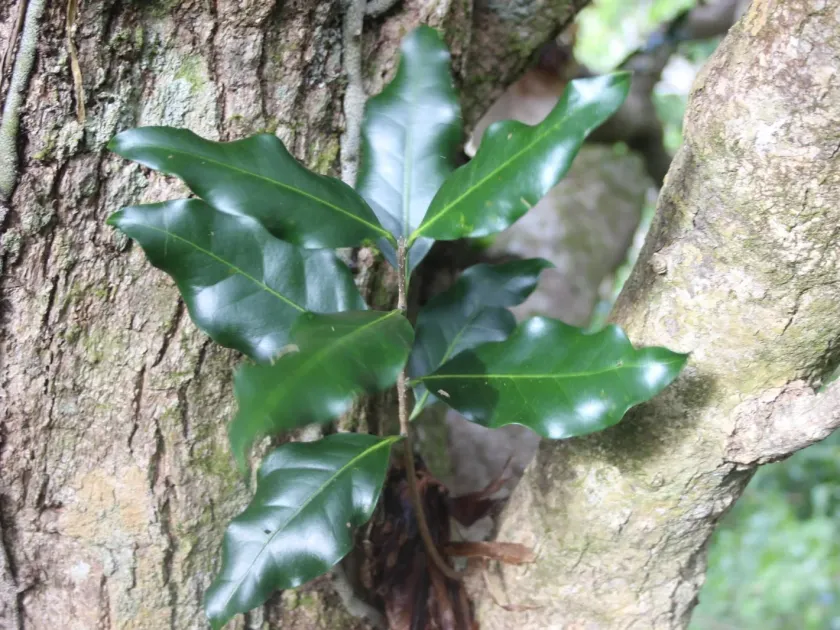
Description
Growing requirements
Nestegis apetala is an evergreen shrub or small tree belonging to the Oleaceae family. It is native to New Zealand and Norfolk Island, where it typically thrives in coastal forest habitats and exposed, rocky landscapes.
The plant is highly adaptable to coastal conditions, demonstrating significant tolerance to salt-laden sea winds. It thrives in mild, subtropical climates, which are essential for its overall health and sustained vegetative growth throughout the year.
Regarding soil requirements, it necessitates a well-draining substrate to prevent root rot. A nutrient-rich, neutral-to-slightly-acidic loam provides the best environment for root development and nutrient uptake in both garden and nursery settings.
Cultivation practices focus on providing adequate sunlight, preferably in locations with protection from intense, direct afternoon heat. Regular, moderate watering is required during the growing season, while care must be taken to reduce irrigation during cooler, dormant months.
Its primary use is in ornamental landscaping, where it is valued for its dense, leathery foliage. It is frequently employed in hedges or as a standalone specimen plant, as it responds very well to structural pruning and training.
Main diseases and pests
The most common health issues for Nestegis apetala involve root rot pathogens, which are almost exclusively triggered by waterlogged soil conditions. Ensuring proper drainage is the most critical factor in managing these risks.
Pest pressures primarily include scale insects and mealybugs, which can cause leaf yellowing and stunted growth if left unmanaged. Integrated pest management using insecticidal soaps or horticultural oils is usually effective in controlling these minor infestations.