
Nepenthes sanguinea
Nepenthes sanguinea
Description
Growing requirements
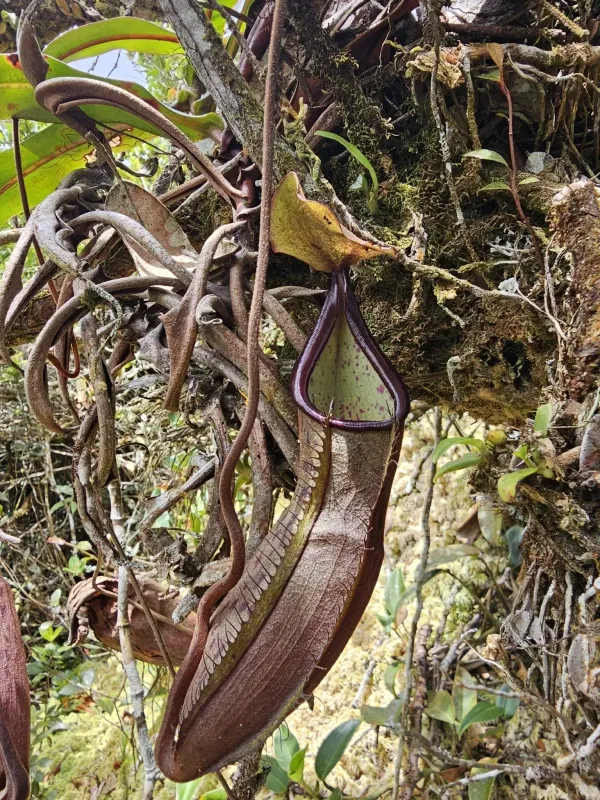
Nepenthes sanguinea is a carnivorous plant species belonging to the family Nepenthaceae. Native to the mountain ranges of Peninsular Malaysia, it thrives in high-altitude tropical forests, typically ranging from 900 to 1800 meters above sea level. It is highly valued for its large, distinctive red-colored pitchers.
The plant requires a stable temperature environment between 18°C and 25°C. While it is somewhat adaptable to cooler temperatures at night, consistent warmth is essential for the healthy formation of pitchers. Exposure to extreme cold or scorching heat should be strictly avoided in a controlled cultivation setting.
High relative humidity is essential, ideally maintained between 70% and 85%. In domestic or greenhouse environments, this is achieved through ultrasonic humidifiers or daily misting. Proper air circulation is just as important to prevent moisture from stagnating and causing fungal issues.
The potting substrate must be nutrient-poor, highly porous, and acidic. A mixture of long-fibered sphagnum moss, perlite, and orchid bark is considered the industry standard. The plant is extremely sensitive to mineral salts; therefore, only distilled, rainwater, or reverse osmosis water should be utilized.
Bright, filtered light is necessary for vigorous growth and vibrant pitcher coloration. Direct afternoon sun can easily scorch the leaves. LED grow lights with a full spectrum are recommended for indoor cultivation to ensure a steady 12-hour day cycle throughout the year.
Main diseases and pests
Common pests affecting Nepenthes sanguinea include mealybugs and aphids, which typically cluster around new growth and developing pitchers. Careful manual removal or the application of organic insecticidal soaps is recommended to avoid chemical stress.
Root rot, caused by poor drainage or excessive water retention, is a frequent threat. If the substrate remains waterlogged, the roots will suffer from oxygen deprivation, making the plant susceptible to lethal fungal infections.
The use of standard fertilizers can be fatal to carnivorous plants as their roots are evolved to absorb nutrients from a poor, acidic environment. Excess nitrogen or minerals will cause root burn and rapid decline of the plant’s vitality.
Fungal leaf spot can develop in environments with high humidity and stagnant air. Regular maintenance, including the removal of dead leaves and ensuring adequate space between plants, helps mitigate the spread of these pathogens.
Scales may occasionally infest the stems, requiring thorough inspection and treatment. Because the plant is specialized in digesting insects, its own metabolic rate is relatively slow, making recovery from heavy pest infestation a challenging and lengthy process.