
Neoboutonia melleri
Neoboutonia melleri
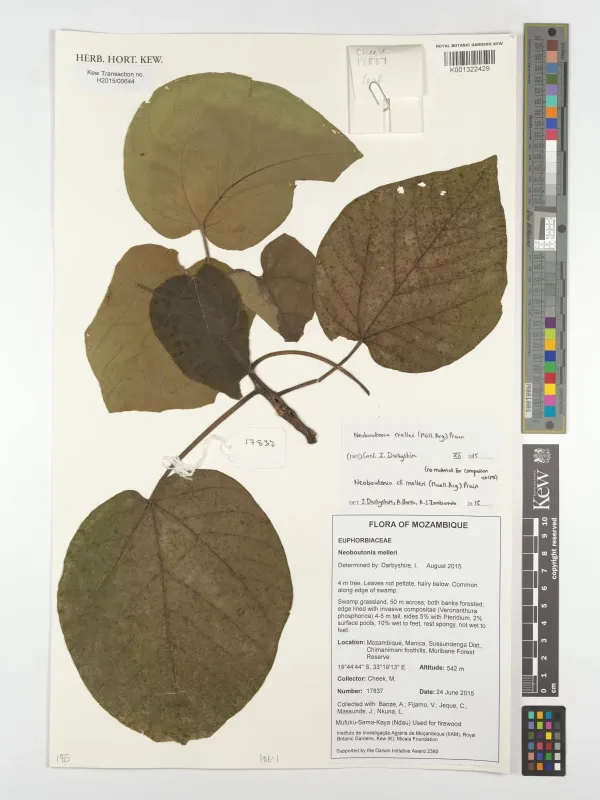
Description
Growing requirements
Neoboutonia melleri is a prominent member of the Euphorbiaceae family, widely recognized in tropical botany as a fast-growing evergreen tree. It can reach considerable heights, often standing between 10 to 20 meters, and is characterized by its large, cordate leaves that form a dense canopy.
Originating from tropical Africa, this species is naturally found in moist evergreen forests and riparian zones. Its distribution stretches across various African regions where rainfall is consistent throughout the year, supporting the high moisture needs of the plant.
The cultivation of this species requires specific soil conditions, ideally deep and fertile soils that offer excellent drainage. While the plant thrives in rich organic substrates, it is susceptible to root rot if the soil becomes waterlogged for extended periods.
Climatic requirements are strictly tropical, necessitating stable warm temperatures and high humidity levels. The tree does not possess cold tolerance and is strictly limited to frost-free environments to maintain optimal growth rates.
In terms of agricultural and forestry utility, Neoboutonia melleri is valued for its lightweight timber, which serves local construction needs and furniture making. Furthermore, it plays a vital role in local ecosystems and traditional medicinal practices due to the chemical composition of its bark and leaves.
Main diseases and pests
The primary threats to this tree species involve various phytophagous insects that feed on the foliage, potentially causing significant defoliation during peak growth seasons.
Fungal pathogens represent a major concern, particularly when trees are planted in areas with poor air circulation, leading to stem cankers or leaf spot diseases that degrade wood quality.
Mechanical damage to the bark by local fauna can lead to secondary bacterial infections, which significantly weaken the structural integrity of the main trunk.
Competition from fast-growing invasive species often hinders the development of young Neoboutonia trees, requiring active management during the establishment phase of the plantation.
Effective control strategies rely on periodic health monitoring and maintaining adequate distance between individual trees to ensure sufficient airflow and light penetration for the canopy.