
Myrmecophila exaltata
Myrmecophila exaltata
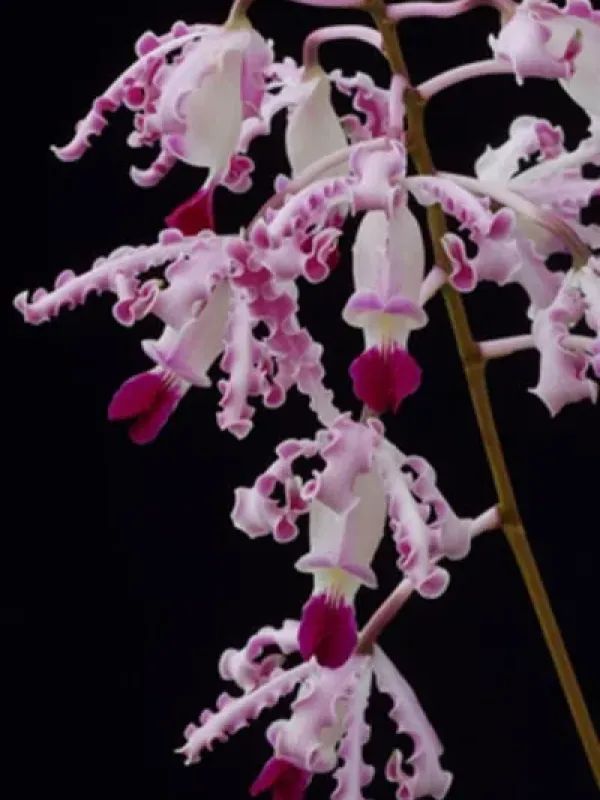
Description
Growing requirements
Myrmecophila exaltata is a fascinating member of the Orchidaceae family, natively found in the tropical regions of Central America. As an epiphyte, it typically grows on the branches of trees, often maintaining a mutualistic relationship with ants in its hollowed pseudobulbs.
Success in cultivation depends on providing high light intensity. These orchids thrive when exposed to bright, indirect light for most of the day, as high light levels are essential for successful blooming cycles.
Temperature requirements are consistent with tropical environments, favoring warm days between 22 and 28 degrees Celsius. A slight drop in nighttime temperatures is beneficial to mimic their natural habitat and trigger hormonal shifts for flowering.
Humidity management is crucial for this species. A range of 60 to 80 percent is ideal, paired with excellent air circulation to keep the leaves and roots dry enough to prevent bacterial outbreaks.
The substrate must be highly breathable. A coarse mixture consisting of pine bark, charcoal, and lava rock is recommended to ensure that the root system receives maximum aeration while retaining just enough moisture for healthy growth.
Main diseases and pests
The most common pests affecting Myrmecophila exaltata are mealybugs and scale insects. These pests often congregate in the tight crevices between the leaves and pseudobulbs, making manual removal or systemic insecticides necessary.
Fungal pathogens such as black rot are a significant risk factor, especially if the plant remains wet for too long or if the ambient temperature is too low. Proper air movement is the best defense against these diseases.
Spider mites can become a problem in indoor environments where the air is dry, leading to a stippled appearance on the leaves and a decrease in the plant's overall vigor.
Root rot caused by stagnant water or compacted substrate is the primary killer of this species. Once the root system is compromised, the plant struggles to take up nutrients, often leading to dehydration of the pseudobulbs.
Preventive maintenance involves routine inspections of the undersides of leaves and ensuring the planting medium is replaced periodically as it begins to break down over time.