
Eurasian watermilfoil
Myriophyllum spicatum
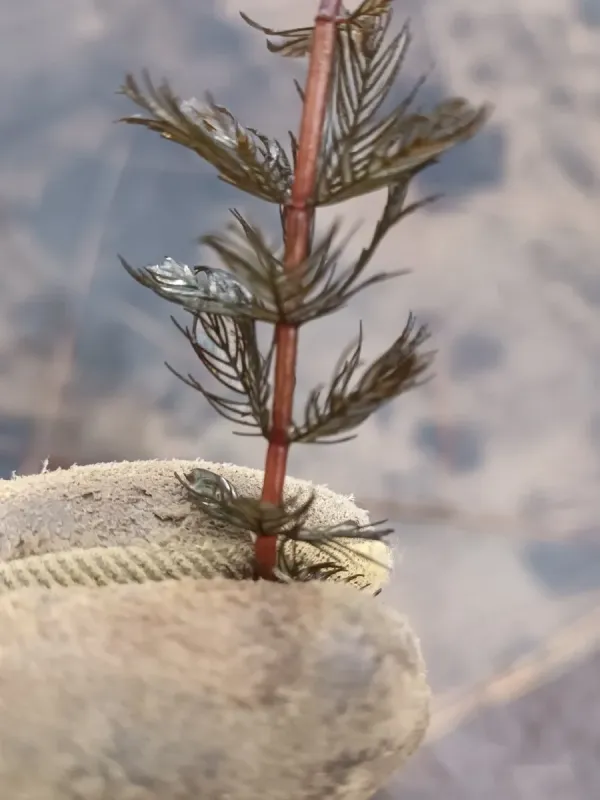
Description
Growing requirements
Eurasian watermilfoil (Myriophyllum spicatum) is a submerged perennial aquatic plant belonging to the Haloragaceae family. Native to Europe, Asia, and northern Africa, it has successfully established itself in various freshwater ecosystems globally.
The plant thrives in lakes, ponds, and slow-moving rivers with moderate nutrient levels. It is highly adaptable to various sediment types, including silty and sandy substrates, where it anchors using a complex root system.
Environmental requirements include adequate light penetration for photosynthesis. While it can grow at depths of up to several meters, maximum productivity is observed in well-lit, shallower zones with temperatures ranging between 15°C and 25°C.
Water quality plays a vital role in its growth. The species is known to tolerate moderate levels of nitrogen and phosphorus, effectively filtering these nutrients from the water column, which helps to mitigate eutrophication.
In managed systems, water movement and transparency are strictly monitored to ensure optimal growth. Excessive turbidity acts as a limiting factor, while stagnant, low-oxygen conditions may hinder healthy biomass development.
Yield
The primary use of Eurasian watermilfoil involves its capacity for biofiltration and water remediation. By rapidly absorbing nutrients, it plays an essential role in maintaining clarity and biological balance in artificial water bodies.
In aquaculture, it serves as a critical habitat for fish populations, providing shelter for larvae and small fish, which significantly increases the survival rate in commercial and recreational fish farming.
The biomass production rate is exceptionally high due to rapid vegetative propagation. Fragmentation is the primary reproductive strategy, where even small pieces of stems can sprout and form new, dense aquatic colonies.
Beyond ecological functions, harvested biomass is being researched as a source of organic fertilizer. Once processed, the nutrient-rich material can be applied to terrestrial crops to improve soil structure and mineral content.
It is also widely utilized in ornamental pond management and landscape architecture to create lush underwater scenery and to compete with nuisance algae, thereby reducing the need for chemical water treatments.
Main diseases and pests
The plant is susceptible to various aquatic insect larvae, such as those of the milfoil midge or aquatic moths, which consume the apical meristems and stem tissue, potentially reducing overall colony density.
Fungal pathogens and certain bacterial diseases can affect the plant, particularly in stressed or overpopulated environments where poor water circulation leads to the accumulation of waste products and reduced oxygen levels.
Invasive competition from other rapid-growing hydrophytes can threaten the stability of watermilfoil stands. Species like hydrilla or coontail often compete for light and space in the same water column.
Chemical pollutants are a major threat. Herbicides and pesticide runoff from adjacent agricultural lands can be lethal to the species, causing rapid chlorosis and subsequent decay of entire submerged patches.
Physical disturbances, such as boat propellers or extreme water fluctuations, can disrupt the plant's growth pattern. While fragmentation aids reproduction, excessive physical damage during specific growth stages may reduce the biomass of mature stands.