
Northern watermilfoil
Myriophyllum sibiricum
Description
Growing requirements
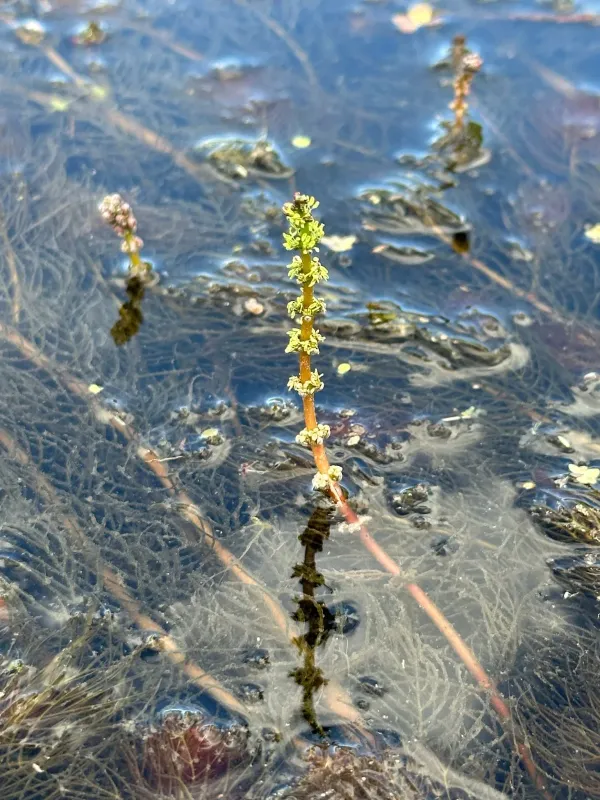
Northern watermilfoil (Myriophyllum sibiricum) is a submersed aquatic plant species belonging to the Haloragaceae family. It is recognized for its feathery, whorled leaves that allow it to flourish in diverse freshwater environments.
The native distribution of this species covers much of the Northern Hemisphere, including extensive ranges across North America, Siberia, and parts of Northern Europe, thriving in ponds, lakes, and calm streams.
The plant requires moderate to high light availability for healthy growth. It is highly sensitive to water turbidity, which limits its depth of colonization and overall development rate.
Soil requirements typically involve organic-rich sediments. Myriophyllum sibiricum relies on its rooting system to uptake nutrients from the substrate, making it a key player in sediment-water nutrient cycling.
Temperature tolerance is a hallmark of this species, as it is well-adapted to cold-climate water bodies, remaining dormant during winter months to initiate rapid growth in early spring.
Yield
In aquatic management, Northern watermilfoil is often utilized to provide structural habitat for macroinvertebrates and fish, which are essential for supporting balanced pond ecosystems and aquaculture production.
The plant demonstrates significant potential for phytoremediation, as it effectively absorbs excess nitrogen and phosphorus, helping to prevent the eutrophication of closed water systems.
Harvesting the excess biomass of this species can provide material for composting. Due to its nutrient content, the processed biomass serves as a valuable organic amendment for soil enrichment.
Ornamental use in water gardening is common, where the plant adds significant biological value and aesthetic beauty to artificial reservoirs, provided its growth is carefully managed.
Managing the yield involves strategic mechanical harvesting, which helps maintain water flow and ensures that excessive plant density does not interfere with recreational or agricultural use of the water.
Main diseases and pests
Major threats to the stability of Northern watermilfoil populations include infestation by epiphytic algae, which block light and nutrients, significantly reducing the vigor of the plant stalks.
Herbivorous insects, such as specific aquatic moth larvae, can cause severe damage to the vascular tissue of the plant, leading to stunted growth and increased susceptibility to secondary infections.
Chemical contamination, particularly from runoff containing herbicides or industrial waste, poses a lethal threat to sensitive populations of this hydrophyte species.
Competition from invasive aquatic weeds can lead to the displacement of Northern watermilfoil. In many areas, non-native species quickly outcompete it for space and nutrient resources.
Drought-induced water level fluctuations remain a significant environmental stressor, often leaving the plant exposed to air, which causes rapid desiccation and total mortality of submersed tissues.