
Myriophyllum mattogrossensis
Myriophyllum mattogrossensis
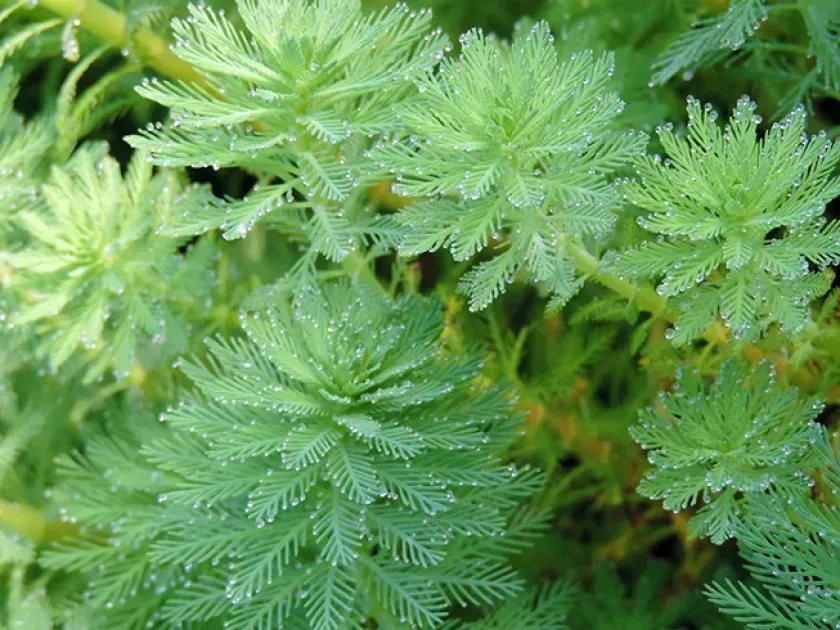
Description
Growing requirements
Myriophyllum mattogrossensis is a member of the Haloragaceae family. Native to the Mato Grosso region of Brazil, this aquatic plant is a popular choice for aquascaping due to its delicate and feathery foliage that adds texture to underwater landscapes.
The plant thrives in tropical freshwater conditions with water temperatures ranging from 22°C to 28°C. To maintain its vibrant green to reddish hues, it requires high light intensity, which mimics the bright sunlight of its South American origins.
A nutrient-rich substrate is essential for robust growth. The plant utilizes a well-developed root system to draw minerals from the soil, complemented by foliar absorption of micro-nutrients found in the water column.
Botanically, it features finely divided leaves arranged in whorls along a soft stem. Its rapid vertical growth necessitates frequent pruning to prevent the plant from shading out other species in the aquarium or pond.
Economically, it is cultivated for the aquarium trade, widely valued for its ability to create dense, forest-like backgrounds. It also provides essential habitat and spawning sites for various freshwater fish species.
Main diseases and pests
The most common threat to this species is the competition from invasive algae. Once algae attach to the fine leaves, they can quickly smother the plant, restricting its ability to photosynthesize effectively.
Nutrient deficiencies, particularly regarding nitrogen and iron, are significant hazards. If these elements are not balanced, the leaves will lose their color, turn yellow, and eventually drop from the stem.
Poor water circulation within dense stands can lead to localized hypoxia and the accumulation of debris. This environment promotes bacterial rot, which can cause the stems to dissolve rapidly if not managed.
Herbivorous fish and certain aquatic snails may target the soft stems. Careful selection of tank inhabitants is required to ensure that the fragile structure of the plant remains undisturbed by livestock.
Rapid fluctuations in water chemistry, such as sudden changes in pH or hardness, can induce shock. This leads to stunted growth or total disintegration of the leaf structure, requiring immediate adjustment of water parameters.