
Indian water-milfoil
Myriophyllum indicum
Description
Growing requirements
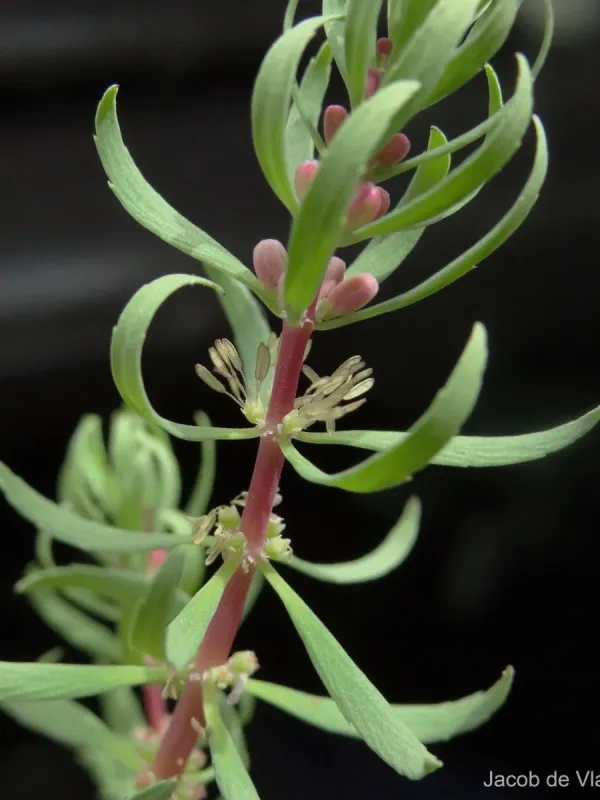
Indian water-milfoil (Myriophyllum indicum) belongs to the Haloragaceae family and is a perennial aquatic herb widely recognized for its submerged growth habit. It features delicate, feathery leaves arranged in whorls, which are highly efficient at gas exchange in aquatic environments.
This species is native to tropical regions of Asia, where it thrives in slow-moving streams, ponds, and shallow lakes. It is well-adapted to warm climates and requires consistent water temperatures, typically ranging from 20 to 30 degrees Celsius for optimal biomass production.
The plant relies heavily on its root system, which anchors it firmly in nutrient-rich organic sediments. By absorbing nitrogen and phosphorus directly from the substrate, it functions as a natural water filter, helping to prevent excessive algae growth and maintain clarity.
Sunlight penetration is a critical factor for the healthy growth of this culture. Because it is a submerged species, it requires clear water to facilitate photosynthesis; prolonged periods of turbidity can significantly hinder its development and overall vigor.
In agricultural and environmental management, this plant is valued for its ability to stabilize sediments and create habitats for small aquatic fauna. It is often integrated into integrated multi-trophic aquaculture systems to improve water quality and increase ecosystem biodiversity.
Main diseases and pests
Pests such as aquatic caterpillars and certain species of snails can cause significant damage to the plant by grazing on its soft, feathery foliage. Severe infestations can defoliate the stems, leaving the plant unable to perform photosynthesis effectively.
Fungal and bacterial infections are common when the plant is stressed by poor water quality or mechanical damage. Symptoms often include discoloration, softening of the stem tissue, and eventual decay of the affected plant segments.
Competition from invasive aquatic weeds poses a constant threat. Aggressive species often grow faster and form dense surface mats, blocking the necessary light required by Indian water-milfoil to sustain its submerged growth phase.
Water chemistry fluctuations, particularly sudden shifts in pH levels or heavy metal toxicity, can prove fatal to this species. Such conditions weaken the plant's natural defenses, making it susceptible to opportunistic pathogens that inhabit the water column.
Maintenance of healthy stands requires careful monitoring of the aquatic environment. Providing adequate circulation, maintaining nutrient levels, and removing damaged plant material are essential practices to ensure the long-term sustainability of the cultivation.