
Watermilfoil
Myriophyllum hybrids
Description
Growing requirements
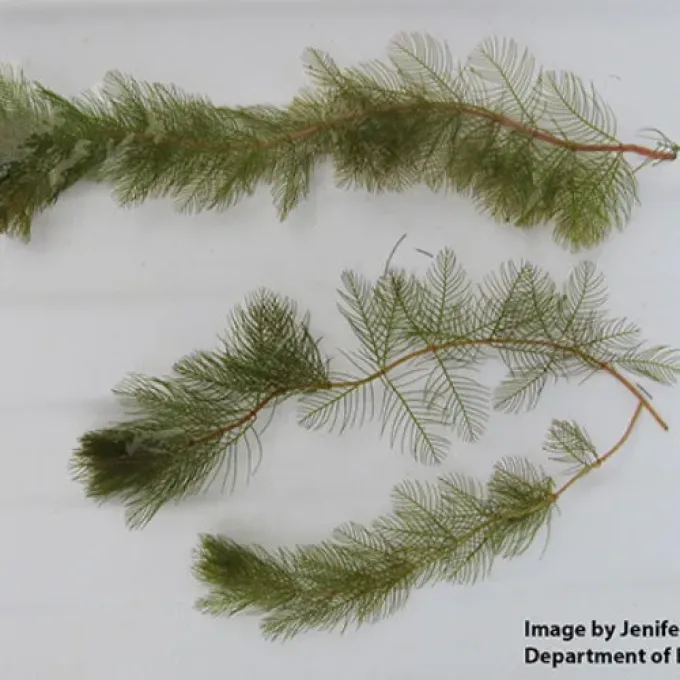
Watermilfoil (Myriophyllum) is a genus of perennial aquatic plants belonging to the Haloragaceae family. These plants are characterized by their submerged growth habit and finely divided, feathery leaves arranged in whorls.
The plant originates from diverse global habitats, ranging from temperate to tropical zones. It is highly adaptable, though it thrives best in stable aquatic environments with clear, nutrient-rich water.
Optimal growth requires consistent light penetration, as the plant performs photosynthesis throughout its submerged stem. Maintaining water clarity is crucial for the health and vitality of the colony.
While some species are rooted in the substrate, they also have the remarkable ability to absorb minerals directly from the water column, making them efficient nutrient scrubbers in various aquatic setups.
Temperature tolerance varies by species, but many common hybrids are hardy enough to survive cold winters, provided the water does not freeze solid down to the root zone.
Yield
Watermilfoil is recognized for its rapid vegetative growth, which can lead to significant biomass production within a single growing season under favorable conditions.
In aquaculture, this crop is valued for its role as a natural oxygenator. It plays a vital role in nitrogen cycling, effectively stripping excess nitrates from the water and preventing eutrophication.
It provides an essential habitat for aquatic fauna, including crustacea and fish fry. Its dense stems serve as a primary shelter, increasing the survival rates in hatcheries and natural ponds.
Managed harvesting of excess watermilfoil yields large amounts of organic material, which can be processed into nutrient-rich compost or utilized as mulch for soil improvement.
The yield is highly responsive to CO2 levels and light intensity; in enriched waters, the plant can multiply its biomass at an aggressive rate, necessitating periodic pruning to maintain ecosystem health.
Main diseases and pests
The primary biological threat to watermilfoil is the colonization by epiphytic algae, which coat the feathery leaves, blocking light and stifling gas exchange, eventually leading to decay.
Insect pests, such as moth larvae of the genus Acentria, can target stems and terminal buds, potentially damaging the structural integrity of the plant colonies during the summer months.
Pathogenic threats include various bacteria and fungi that flourish when water flow is stagnant and oxygen levels drop. This often occurs when colonies become too dense, preventing water circulation.
In some regions, certain hybrids are classified as invasive weeds due to their ability to outcompete native aquatic flora, clogging waterways and disrupting irrigation systems.
Integrated management practices, including mechanical harvesting and water circulation improvement, are the most effective methods to mitigate disease outbreaks and prevent weed-like overgrowth.