
Low watermilfoil
Myriophyllum humile
Description
Growing requirements
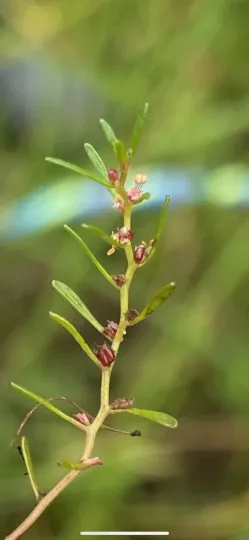
Low watermilfoil (Myriophyllum humile) is a perennial aquatic plant belonging to the Haloragaceae family. Native to North America, this species is highly versatile, capable of thriving as a fully submerged aquatic plant or growing in semi-emergent states along the muddy banks of freshwater habitats.
The plant requires moderate to high light intensity to maintain its characteristic feathery foliage. In its natural habitat or ornamental ponds, it prefers quiet, slow-moving, or stagnant water. Optimal water temperatures range from 20 to 26 degrees Celsius, promoting steady growth throughout the active season.
Soil requirements involve a nutrient-rich substrate, preferably composed of silty, organic-rich sediments. When cultivated in artificial environments, it is essential to ensure the sediment remains loose enough for root development, although the plant primarily absorbs minerals directly from the water column through its dissected leaves.
Propagation is primarily vegetative. By taking stem cuttings that include nodes, the plant can easily establish new roots in the substrate. This method allows for rapid expansion across shallow areas of a water body, making it an excellent candidate for stabilizing pond edges or creating natural filtration zones.
In terms of care, maintenance involves monitoring water clarity and preventing the overgrowth of filamentous algae, which can smother the plants. Periodic pruning is recommended to maintain density and prevent the plant from dominating smaller aquatic setups or interfering with water filtration systems.
Main diseases and pests
The main threats to Low watermilfoil include competition from aggressive algae and invasive aquatic weeds. If the water becomes too turbid or shadowed by taller vegetation, the lower parts of the Myriophyllum stems can begin to degrade due to lack of photosynthesis and restricted gas exchange.
Pest issues often involve aquatic snails or insect larvae that feed on tender plant tissues. To mitigate these risks, it is important to maintain a healthy ecological balance in the pond or aquarium, ensuring that predators of these pests or natural biological controls are present to keep populations in check.