
Farwell's Water Milfoil
Myriophyllum farwellii
Description
Growing requirements
Farwell's Water Milfoil (Myriophyllum farwellii) is a perennial aquatic plant that belongs to the Haloragaceae family. This species is primarily adapted to submerged life, thriving in stagnant or slowly moving freshwater bodies across various parts of North America.
In its natural habitat, the plant grows in areas with muddy or sandy substrates that provide necessary nutrients for its root system. It exhibits a preference for clear, oxygenated water, which allows the plant to maximize its photosynthetic capacity throughout the growing season.
The environmental requirements for this plant include moderate temperatures and relatively high water clarity. As a submerged plant, it is sensitive to light penetration, meaning that turbid waters can significantly inhibit its growth and overall physiological health.
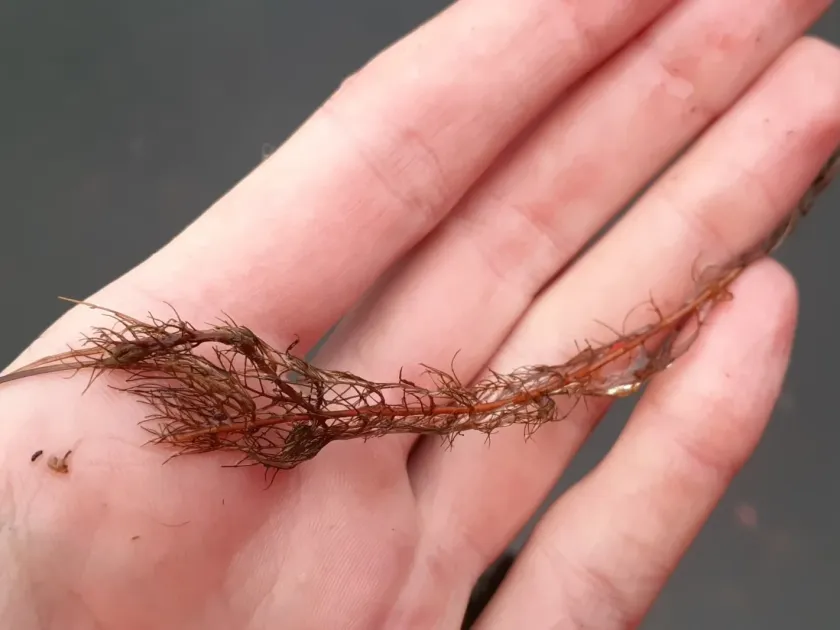
Botanically, Farwell's Water Milfoil is characterized by finely divided leaves arranged in whorls along a flexible stem. This anatomical structure is highly efficient for underwater survival, allowing the plant to absorb dissolved nutrients directly from the water column.
Regarding its utility, the species is often recognized for its role in aquatic ecosystems and biological water treatment. It acts as an effective oxygenator, helping to maintain water quality by reducing nutrient loads and providing shelter for aquatic microfauna.
Main diseases and pests
The primary threats to Farwell's Water Milfoil involve the degradation of water quality caused by agricultural runoff. Excess nutrients like phosphorus and nitrogen can lead to algal blooms, which shadow the plant and suppress its photosynthetic activities.
Biological threats include specific aquatic insects and herbivores that graze on the delicate leaf structures. Once damaged, the plant becomes susceptible to secondary infections by waterborne bacteria and pathogenic fungi that can decay the stem tissue.
Invasive weed species pose a significant threat to the survival of the plant by outcompeting it for space and mineral nutrients. The rapid spread of aggressive exotic aquatic plants often leads to the displacement of native species like Myriophyllum farwellii.
Changes in the hydrological regime, such as drastic fluctuations in water depth, can also jeopardize the stability of a population. Consistent water levels are essential for the plant to maintain its metabolic balance and ensure the successful propagation of new shoots.
Integrated water management is necessary to preserve the health of the plant. Regular monitoring of chemical parameters and the manual removal of competing debris are effective techniques for maintaining a healthy and thriving population of this aquatic culture.