
Alternate water-milfoil
Myriophyllum alterniflorum
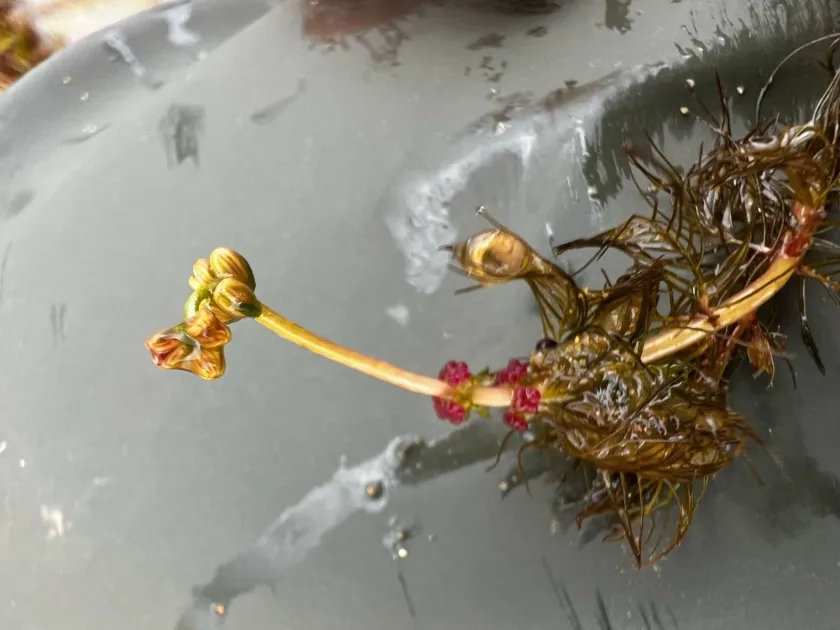
Description
Growing requirements
Alternate water-milfoil (Myriophyllum alterniflorum) is a perennial aquatic plant belonging to the Haloragaceae family. It is widely recognized for its adaptation to submerged conditions in fresh water lakes, rivers, and ponds across the Northern Hemisphere.
The plant features slender, branching stems and finely divided leaves arranged in whorls. This structure increases the surface area, facilitating rapid nutrient uptake and gas exchange, which is essential for survival in an aquatic environment.
Successful growth requires clear, well-oxygenated water with a neutral to slightly acidic pH. Unlike terrestrial crops, this plant relies on water currents for nutrient delivery and thermal regulation, thriving best in stable, unpolluted ecosystems.
Agricultural and ecological applications primarily focus on its use in phytoremediation and as a structural element in hatchery ponds to provide spawning surfaces for fish. Its presence is often used as a bio-indicator for clean water quality.
Propagation is mostly vegetative. Stems naturally break into fragments that root easily in the substrate, allowing for efficient colony expansion within suitable aquatic habitats that meet light and temperature requirements.
Main diseases and pests
The main threats to the plant include eutrophication caused by agricultural runoff, which increases turbidity and nutrient load, often favoring aggressive algae over this sensitive species.
Diseases are typically caused by opportunistic fungi under stress conditions, such as sudden thermal changes or stagnant water. Insect pests and snails may also cause significant damage during the active growing season.