
Myricaria squamosa
Myricaria squamosa
Description
Growing requirements
Myricaria squamosa is a perennial shrub belonging to the Tamaricaceae family. Originating from the rocky riverbanks and mountainous areas of Central Asia, this species has evolved to thrive in harsh, exposed conditions, making it an excellent candidate for specialized landscaping and soil stabilization.
The plant requires full sun exposure and well-draining soils to prosper. While it is naturally found near water, in cultivation it performs best in soils where excess moisture can move away freely, as constant root wetness can lead to decay and fungal complications. It tolerates poor and gravelly soil compositions exceptionally well.
Regarding climate, this shrub exhibits strong resilience against temperature extremes, including both freezing winters and intense summer heat. It is a highly robust plant that requires minimal protection once established, though supplemental watering during prolonged dry spells is beneficial for maintaining foliage density.
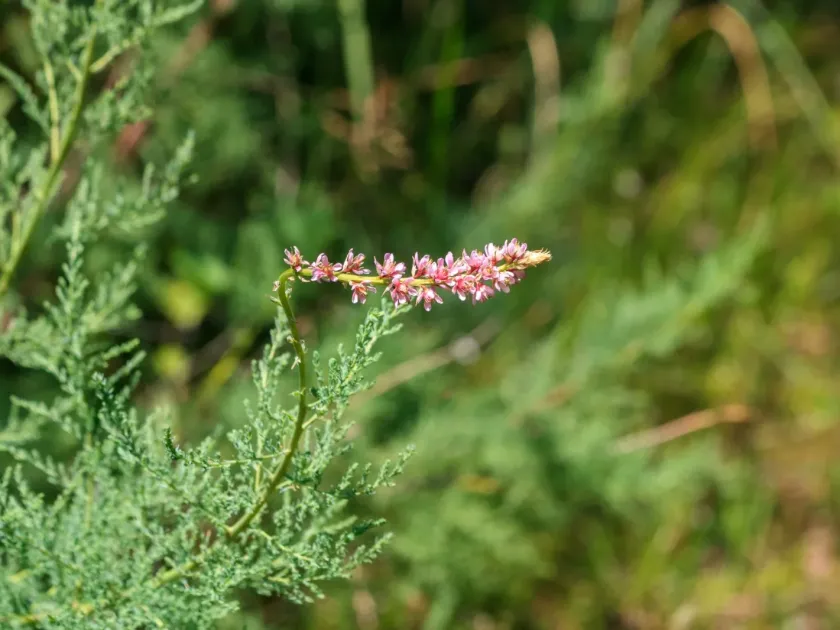
Botanically, Myricaria squamosa is recognized by its small, scale-like leaves that tightly overlap along the stems, giving it a distinct, almost conifer-like appearance. Its aesthetic value is significantly enhanced during the blooming period when it produces delicate pink racemes on the tips of new growth.
Maintenance and agrotechnics for this shrub revolve primarily around pruning. Cutting back older branches encourages fresh growth and maintains a tidy, dense architecture. Periodic fertilization with balanced, slow-release granules in early spring provides enough nutrients to sustain vigorous development throughout the season.
Main diseases and pests
The primary threats to Myricaria squamosa include fungal pathogens that thrive in humid, stagnant conditions. Ensuring proper spacing between plants and adequate air circulation is essential to prevent leaf spots and stem rot, which can otherwise compromise the structural integrity of the plant.
Pest management should focus on monitoring for common sap-sucking insects like aphids and spider mites. These pests are particularly active during hot, dry periods and can be effectively controlled through regular inspection and the timely application of targeted horticultural sprays or systemic insecticides.