
False tamarisk
Myricaria alopecuroides
Description
Growing requirements
False tamarisk (Myricaria alopecuroides) is a perennial deciduous shrub belonging to the Tamaricaceae family. It is naturally adapted to riparian habitats, including riverbanks and gravelly alluvial deposits, which dictates its high affinity for moisture.
The plant thrives in full sun exposure. Adequate light is essential for the development of its signature feathery foliage and dense branching habit. In shaded environments, the plant tends to become leggy and loses its aesthetic appeal.
Regarding soil, this species prefers sandy, well-draining, yet consistently moist substrates. It is well-suited for soil stabilization projects near water bodies due to its ability to tolerate periodically wet roots and high mineral content in the soil.
Climate adaptability is one of its key strengths, as it can withstand significant temperature fluctuations. However, in colder climates, establishing a layer of mulch before winter is beneficial to protect the root system from deep soil freezing.
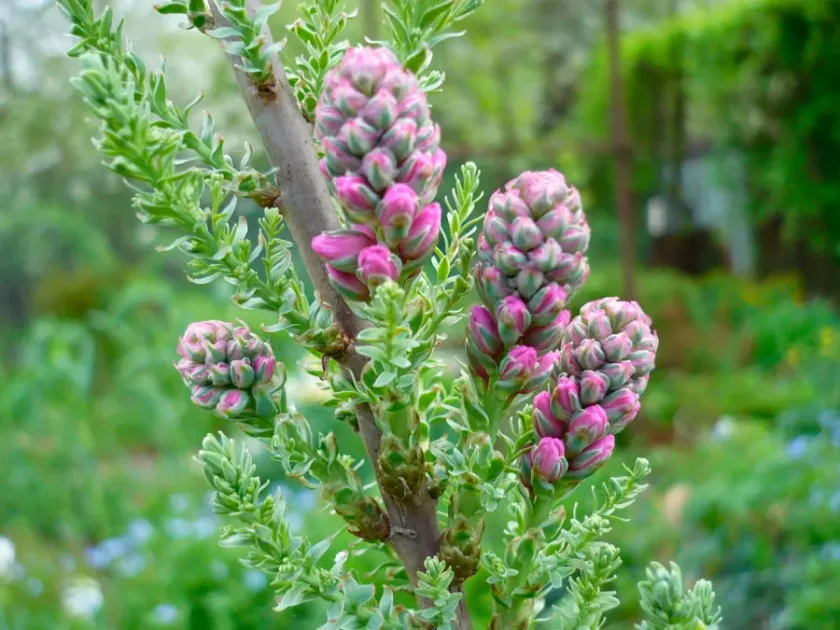
Culturally, it is prized for its unique spikes of pinkish flowers that resemble a fox tail. Its primary utility lies in ornamental landscaping, particularly in large gardens and public parks where moisture-rich areas require specialized vegetation.
Main diseases and pests
Fungal pathogens are the most common concern for false tamarisk, particularly when planted in areas with poor air circulation. High humidity can promote the growth of mold and mildew on the foliage, requiring careful spatial management.
Aphids are the primary insect pests affecting young, succulent shoots. Regular monitoring during the active growing season is recommended to manage populations before they cause visible leaf curling or damage to the plant's growth tips.
Root rot remains a risk if the drainage is insufficient, especially in heavy clay soils that retain too much water. Ensuring that the planting site has adequate percolation is vital for the long-term survival of the shrub.
Powdery mildew can occur during hot, humid summer weather if there is lack of ventilation within the foliage. Proper pruning of internal branches allows for better airflow, effectively reducing the risk of fungal spread.
In cases of severe infection or pest infestation, integrated pest management practices should be employed, utilizing selective treatments that do not disrupt the ecosystem of the surrounding garden area.