
Muscari spreitzenhoferi
Muscari spreitzenhoferi
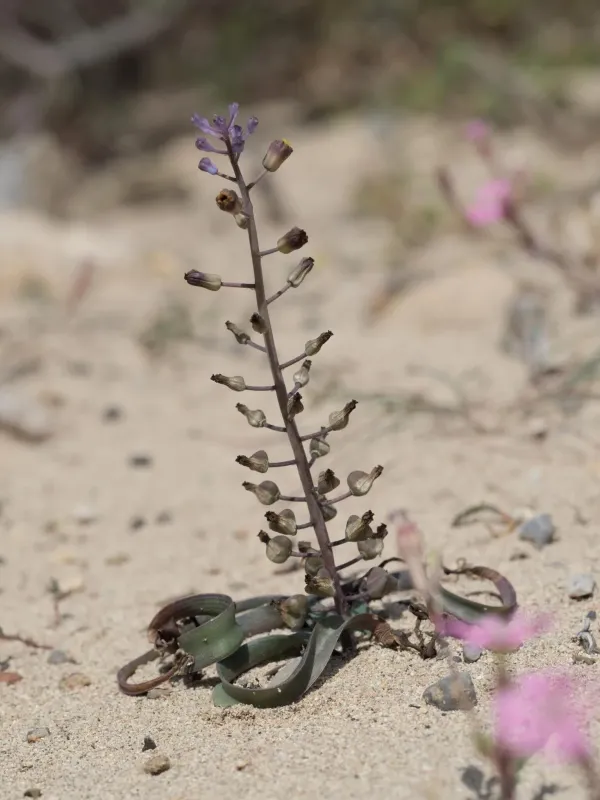
Description
Growing requirements
Muscari spreitzenhoferi is a perennial bulbous plant belonging to the Asparagaceae family. Native to the island of Crete, it is a rare species that thrives in rugged, rocky environments under Mediterranean climate conditions.
For successful cultivation, the soil must be exceptionally well-drained. Heavy, clay-based soils should be amended with grit or sand to prevent stagnant water, which is the most common cause of bulb rot in this species.
The species requires full sun to partial shade exposure. In its natural habitat, it benefits from intense spring sunlight to develop its dense, violet-blue racemes before the onset of the hot, dry Mediterranean summer.
Agrotechnical maintenance focuses on the seasonal cycle. Active growth requires moderate moisture, while the summer dormant phase necessitates dry soil conditions to mimic the natural Mediterranean summer drought.
Propagating the plant is typically done via offset bulbs. Gardeners should wait until the foliage has fully withered in late spring or early summer before lifting the bulbs to divide them, ensuring the plant is in its dormant state.
Main diseases and pests
The primary threats to Muscari spreitzenhoferi include fungal diseases such as botrytis and soft rot, particularly when the bulbs are stored or planted in conditions with poor air circulation or excess humidity.
Pests such as aphids and bulb mites can infest the foliage and the bulb scales. Monitoring is essential during the early stages of the growing season when new leaves emerge and are most vulnerable.
Preventative measures include sourcing high-quality, healthy bulbs and treating them with a fungicide soak prior to planting. This significantly reduces the risk of soil-borne pathogens attacking the root system.
Rodents such as voles can cause significant destruction by consuming the bulbs during winter. Installing hardware cloth or protective netting around the planting area can be an effective physical barrier against these pests.
To ensure long-term health, avoid over-fertilizing with high-nitrogen products, as this promotes succulent growth that attracts aphids and makes the plant more susceptible to fungal infections.