
Muscari commutatum
Muscari commutatum
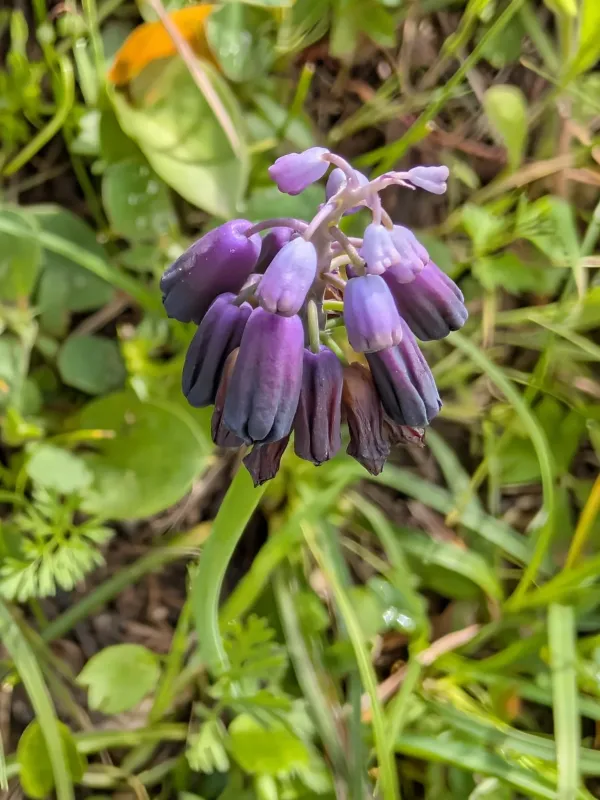
Description
Sowing dates
Planting of Muscari commutatum bulbs is ideally performed in the autumn, specifically from late August to early October. It is crucial to plant them before the ground freezes to allow the root system to establish itself adequately.
Propagation through seeds is possible but requires a cold stratification period of several months. Bulbs should be planted at a depth of approximately 7–10 cm, ensuring they are placed in well-draining soil to prevent winter rot.
For optimal landscape presentation, bulbs should be spaced 5–10 cm apart. This density allows the plants to form thick clusters that bloom effectively in the early spring season.
The planting site should be prepared with compost to provide necessary nutrients. Avoid high-nitrogen fertilizers at the time of planting to prevent weak, forced growth that is susceptible to frost damage.
After planting, lightly mulching the area with organic matter can help stabilize soil moisture and temperature. This is particularly beneficial in regions prone to fluctuating early spring temperatures.
Growing requirements
Muscari commutatum, a member of the Asparagaceae family, is a herbaceous perennial native to the Mediterranean region. It is characterized by its early spring flowering and high adaptability to its natural rocky habitat.
The plant thrives in full sun but can tolerate partial shade, especially during the peak of the flowering season. It requires a well-drained soil structure to mirror its native Mediterranean environment where summers are dry.
Soil pH should ideally be neutral or slightly acidic for the best nutrient absorption. Heavy clay soils should be amended with sand or horticultural grit to improve drainage and air circulation around the bulbs.
Watering should be consistent during the active growth phase in spring. Once the foliage begins to wither after flowering, watering should be reduced to prevent the bulb from decaying during its dormant stage.
Botanically, this species is noted for its deep violet to near-black inflorescences and slender, grass-like leaves. It is widely used in rock gardens and as a naturalizing plant in meadow-style landscaping.
Main diseases and pests
Viral mosaic infections represent a significant risk to Muscari populations, often spreading through aphids or contaminated soil. There is no cure for these viruses, so affected plants must be removed immediately.
Fungal rots, particularly Fusarium, often occur when bulbs are stored or planted in conditions with poor drainage. Fungicidal treatment of bulbs prior to planting is a standard preventative measure.
Spider mites are common pests that can infest the foliage during hot, dry springs, causing leaves to yellow and wilt. Regular inspection and targeted application of acaricides can mitigate this damage.
Bulb flies can cause significant subterranean damage to the root system, weakening the plant's vigor. Maintaining proper soil health and crop rotation can disrupt the lifecycle of these pests.
Rodents, specifically voles and mice, often target the nutrient-rich bulbs during the winter months. Protecting bulb beds with wire mesh or repellents is essential in areas with high rodent populations.