
Musanga smithii
Musanga smithii
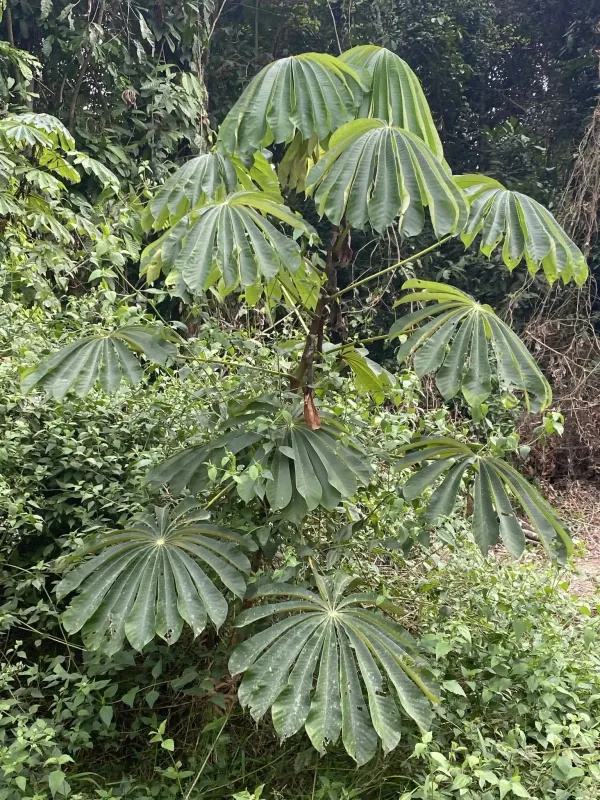
Description
Sowing dates
Musanga smithii, commonly referred to as the African corkwood tree, is a prominent member of the Urticaceae family. It is recognized as a fast-growing pioneer species essential for secondary forest regeneration.
Propagation is primarily achieved through seeds, which require high humidity and warm temperatures, typically between 25°C and 30°C, to trigger successful germination.
In nurseries, seeds are sown in a light, well-draining substrate. Given their light-sensitive nature, they should be covered only slightly with soil to ensure optimal germination rates.
Seedlings are ready for transplanting once they reach a height of approximately 40 cm, usually occurring after three to four months of initial growth in a protected environment.
Planting in the field is most successful at the start of the rainy season, allowing the root system to establish itself before the onset of drier periods.
Growing requirements
The species thrives in humid tropical climates with substantial annual rainfall. It is intolerant to frost and prolonged droughts, which can significantly damage the tender branches.
The ideal soil conditions include deep, well-drained loams rich in organic matter. While the tree appreciates moisture, it cannot survive in waterlogged or swampy conditions.
As a light-demanding pioneer species, Musanga smithii requires full sun exposure. Even partial shading during its juvenile stage can result in stunted growth and poor trunk development.
The plant performs best at temperatures ranging from 22°C to 30°C. Consistent warmth is vital for maintaining the rapid metabolic rate required for its characteristically fast growth.
Wind protection is essential, particularly for younger trees. Despite their structural resilience in forest stands, individual trees can suffer from breakage during high-velocity wind events.
Yield
The primary economic value of Musanga smithii lies in its lightweight, porous wood, which is extensively utilized for manufacturing plywood, matches, and packing crates.
Beyond its timber value, the tree acts as an effective soil enhancer. Its leaf litter decomposes rapidly, providing a significant influx of nutrients into the topsoil layers.
In agroforestry systems, this species is frequently used for rapid site restoration and erosion control, thanks to its extensive and fast-developing root system.
Productivity is high in short-rotation forestry, where harvests can occur within 6 to 10 years, providing a steady supply of wood products for local industries.
The bark and sap of the tree also have traditional medicinal applications, making the species a versatile resource in local rural economies.
Main diseases and pests
Fungal infections of the stem represent the most significant threat to Musanga smithii plantations, especially in areas with stagnant air and high ambient humidity.
Pest infestations, particularly by stem-boring insects, can severely compromise the structural integrity of the timber, rendering it less suitable for construction purposes.
Root-knot nematodes can pose a risk in monoculture plantations, necessitating strict adherence to site preparation protocols and potential crop rotation strategies.
Weed competition during the first year of establishment can drastically reduce growth rates, requiring manual weeding or mulching to ensure the seedlings get a head start.
Proactive management, such as appropriate spacing to ensure air circulation and the removal of infected plant debris, is the best defense against major pathogen outbreaks.
Harvesting
Harvesting typically targets mature stands with a marketable stem diameter. The operation usually involves a clear-cut method due to the tree's limited capacity for coppicing.
Manual or mechanized felling should be executed with care to protect the soil surface from unnecessary compaction, which helps in preparing the site for the next planting cycle.
Freshly cut timber is prone to rapid decay and insect attack; therefore, logs must be moved to processing facilities or kiln-dried immediately after the harvest.
The timber's light weight makes it relatively easy to handle and transport, even in challenging terrain, provided the logistical chain is well-coordinated.
Post-harvest management involves clearing and mulching biomass residues, which serves to enrich the soil and prepare the area for subsequent reforestation or agricultural use.