
Murraya paniculata
Murraya paniculata (L.) Jack var. ovatifoliolata Engl.
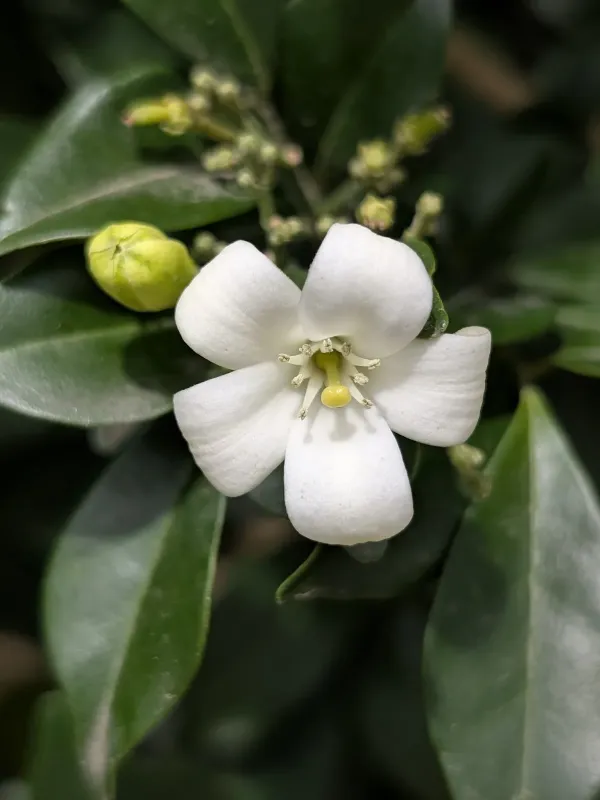
Description
Growing requirements
Murraya paniculata, commonly known as orange jasmine, is a species of shrub or small tree in the Rutaceae family. It is native to tropical and subtropical regions of Southeast Asia, thriving in high-humidity environments.
The plant requires a temperature range between 22 and 28 degrees Celsius for optimal vegetative growth. It is highly sensitive to cold drafts and significant temperature fluctuations, which can trigger leaf drop and bud abortion.
The ideal growing medium is a well-draining, nutrient-rich soil mix with a pH ranging from 5.5 to 7.0. Proper drainage is essential, as the roots are highly susceptible to rot if subjected to waterlogged conditions.
Light requirements are stringent: the plant prefers bright, indirect sunlight. While it can tolerate some direct morning sun, intense afternoon rays may scorch the leaves and inhibit healthy development.
Humidity management is vital, with a preferred range of 60-70%. Regular misting is recommended in dry climates, and irrigation should be applied only when the top 2-3 centimeters of soil are dry to the touch.
Yield
Murraya paniculata is commercially significant in the medicinal and ornamental sectors. Its foliage and fruits contain specific secondary metabolites, such as flavonoids and essential oils, which are utilized in various health-related products.
In traditional and modern pharmacological studies, extracts from the plant have been evaluated for their potential antioxidant and anti-inflammatory properties. The plant serves as a valuable resource for botanical research and bioactive compound extraction.
Horticulturally, it is prized for its fragrant white flowers that bloom throughout the year under favorable conditions. These flowers are followed by small, bright red berries, which add to the plant's aesthetic appeal.
Propagation is primarily achieved through seeds or stem cuttings. Fresh seeds are essential for high germination rates, as the viability of the seed decreases rapidly once it is removed from the fruit and allowed to desiccate.
Commercial yields are optimized through systematic fertilization and precise irrigation management. Consistent nutrition, particularly with magnesium and iron supplementation, is necessary to maintain dense, dark green foliage.
Main diseases and pests
Major pests affecting Murraya paniculata include spider mites, scale insects, and mealybugs. These pests tend to congregate on the undersides of leaves and in the junctions of stems, necessitating vigilant monitoring.
Fungal diseases, including root rot and powdery mildew, are predominantly caused by improper environmental management. Excessive humidity without adequate ventilation creates an environment conducive to fungal proliferation.
Physiological disorders such as leaf chlorosis often result from nutrient imbalances, specifically iron or nitrogen deficiency. Corrective measures include the application of chelated micronutrients and ensuring a balanced pH.
- Spider mites: Manage with increased humidity and neem oil.
- Scale insects: Physical removal or systemic insecticide application.
- Root rot: Improvement of soil drainage and frequency of irrigation.
Regular pruning of older or diseased wood is recommended to maintain plant vigor and improve air circulation within the canopy, which naturally suppresses most fungal pathogens.