
Orange jasmine
Murraya paniculata (L.) Jack
Description
Growing requirements
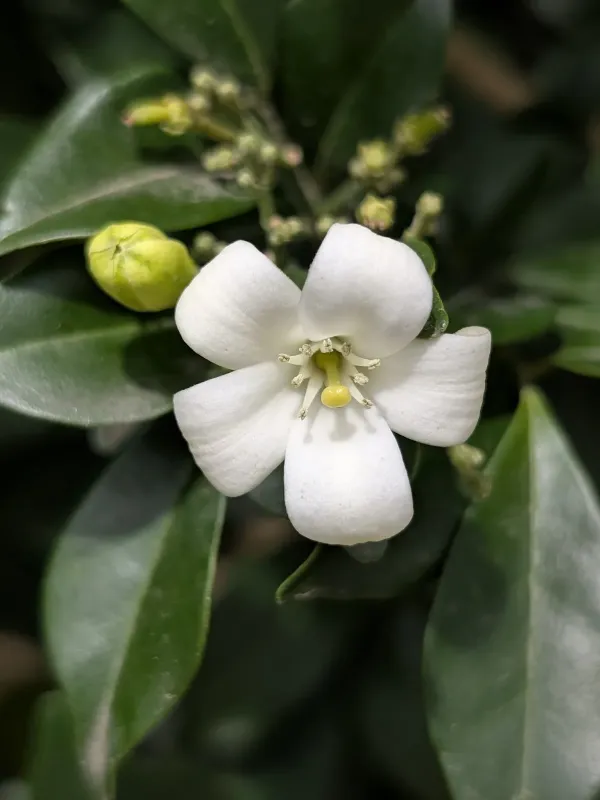
Murraya paniculata, commonly known as orange jasmine or mock orange, is a tropical shrub belonging to the Rutaceae family. It is prized for its glossy, evergreen foliage and intensely fragrant white flowers that bloom in clusters, followed by small red, berry-like fruits.
This species is native to tropical regions of Asia and the Pacific. Due to its adaptation to subtropical environments, it performs best in well-drained, fertile, and slightly acidic soils. It requires significant warmth to thrive, with a preferred temperature range of 20°C to 28°C.
In terms of light exposure, Murraya paniculata demands plenty of bright, indirect sunlight to produce flowers consistently. When grown indoors, placing it near an east or south-facing window with light filtration is ideal to avoid scorching the leaves while ensuring enough energy for growth.
Watering requirements are strict: the plant needs consistent moisture during the growing season but is highly susceptible to root rot if left in standing water. It is essential to ensure that the pot has excellent drainage and that the substrate dries slightly before the next watering session.
Nutrient management involves balanced NPK fertilization applied during the spring and summer months. Since it is related to citrus plants, micronutrients such as iron and magnesium are critical to prevent chlorosis, especially in container-grown specimens that cannot access minerals from natural soil.
Main diseases and pests
Pests that frequently infest orange jasmine include scale insects, mealybugs, and spider mites. These pests typically congregate on the undersides of leaves or along stem axils, extracting sap and weakening the plant. Manual removal or the application of horticultural oils is often required for management.
Fungal issues, such as root rot and leaf spot, are the primary disease threats. These are usually symptoms of poor ventilation, high humidity without adequate airflow, or overwatering. Maintaining a clean growing environment and ensuring the soil is not waterlogged are the most effective preventative measures.