
Mucuna gigantea
Mucuna gigantea
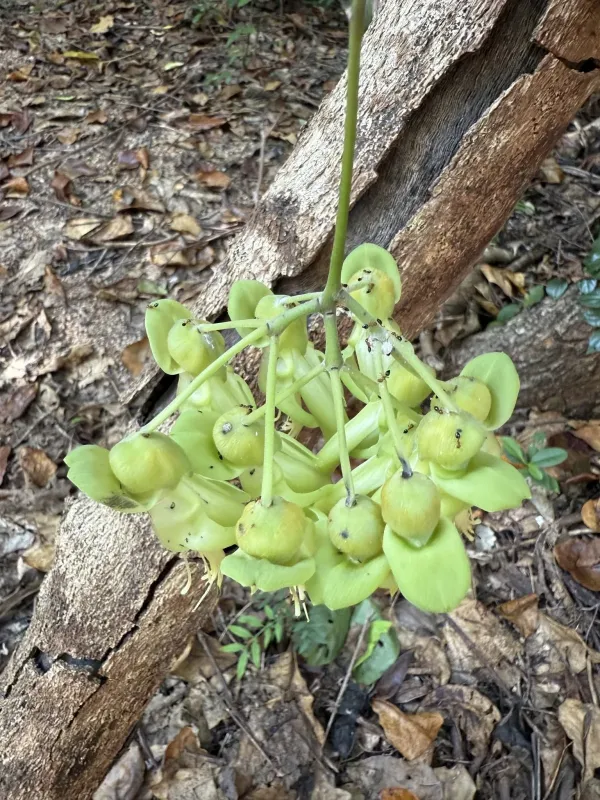
Description
Sowing dates
Mucuna gigantea is a robust, perennial woody vine belonging to the Fabaceae family, native to tropical regions across Asia and the Pacific islands.
The planting process typically begins with the onset of the rainy season, as the plant requires significant moisture to germinate and establish its deep root system.
Seeds of this species are protected by a hard, impermeable seed coat, which necessitates pre-sowing treatments such as scarification or overnight soaking in water.
The seeds should be sown at a depth of 3 to 5 centimeters, spaced apart sufficiently to accommodate the plant's vigorous growth and rapid development of long, trailing vines.
Providing sturdy vertical structures is recommended, although in large-scale agricultural settings, the plant is often left to spread across the ground to serve as a living mulch.
Growing requirements
The species thrives in warm tropical climates where the temperature remains consistently between 22°C and 30°C throughout the year, as it is highly sensitive to frost.
It prefers well-drained, fertile soil, though it demonstrates remarkable adaptability to various soil types, provided that they are not prone to prolonged waterlogging.
Being a leguminous plant, it forms a symbiotic relationship with nitrogen-fixing bacteria, allowing it to flourish in soils that are relatively low in organic nitrogen.
High relative humidity is essential for optimal vegetative growth, as the plant uses its extensive foliage to maintain a moist microclimate beneath its canopy.
Full sun exposure is ideal, though the plant can handle partial shade during the initial establishment period until the leaves form a dense covering.
Yield
The primary agricultural value of Mucuna gigantea lies in its ability to produce significant amounts of biomass, which serves as high-quality green manure.
Farmers utilize the plant to combat soil erosion on sloped terrains, as its extensive root system binds the soil particles together effectively.
It acts as a powerful suppressive agent against invasive weed species, creating a dense shade that inhibits the germination and growth of competing flora.
The biomass can be incorporated back into the soil to increase organic content and improve water retention, which is crucial for sustainable tropical crop rotation.
Harvesting the organic material at the flowering stage maximizes the nutrient content added to the soil, ensuring that the field remains productive for subsequent planting cycles.
Main diseases and pests
The plant is generally resilient, yet it may succumb to fungal pathogens such as leaf spot or anthracnose during periods of excessively high humidity and stagnant air.
Root rot, specifically caused by water saturation, remains the most frequent challenge when cultivating this plant in heavy, poorly drained clay soils.
Various defoliating insects and beetles may target young leaves, which can stunt the growth of the vine if the infestation is not managed early in the season.
Nematode infestations can occur in sandy soils, necessitating a strictly planned crop rotation to prevent the buildup of soil-borne pests over multiple years.
Agronomists must also note that the pods possess irritating stinging hairs, requiring careful handling or mechanical harvesting techniques to protect farm workers from dermatitis.