
Montrichardia linifera
Montrichardia linifera
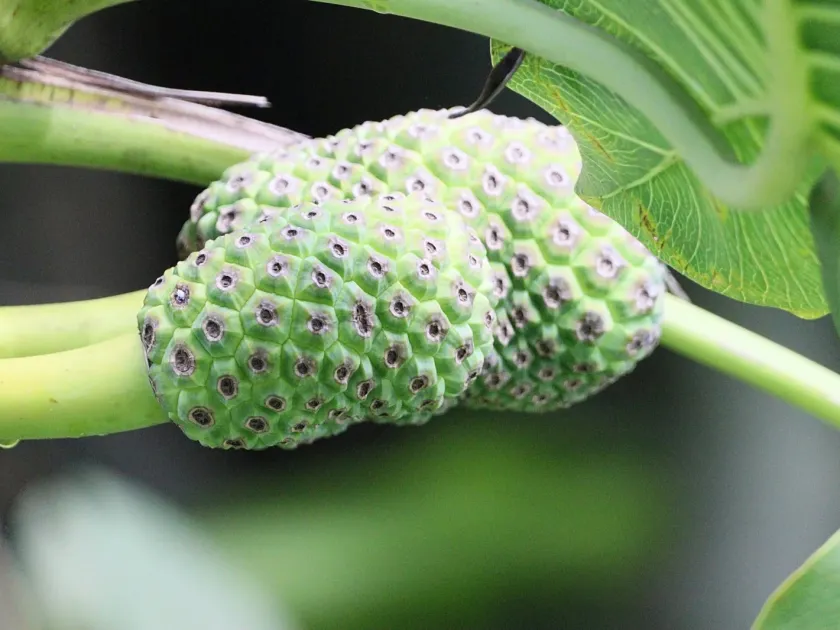
Description
Sowing dates
Montrichardia linifera is a perennial herbaceous plant belonging to the Araceae family. In its natural habitat, it propagates primarily through seeds that are dispersed by water currents during seasonal flooding cycles.
For agricultural cultivation, seed germination is performed under controlled greenhouse conditions with high humidity levels. It is essential to sow the seeds immediately after harvest, as they exhibit poor longevity and low germination rates if allowed to dry out.
Seeds should be sown in a rich, organic substrate with constant water access. The temperature must be maintained consistently above 25 degrees Celsius to facilitate successful germination and initial seedling growth.
Seedlings are transplanted to their permanent location once they develop several true leaves. Adequate spacing between individual plants is necessary to allow for the development of their extensive and robust root systems.
Successful establishment in field conditions requires careful acclimation to the natural flooding cycles typical of the tropical regions where the plant is native, ensuring the soil remains consistently waterlogged.
Growing requirements
This crop has highly specific requirements for soil moisture and environmental conditions. It is a true hydrophyte, thriving best in waterlogged or flooded environments such as riverbanks and floodplains.
The ideal soil consists of silty alluvial deposits rich in minerals and organic matter. These sediments must be periodically replenished by water flow to maintain the nutrient levels necessary for vigorous growth.
The optimal temperature range for development is between 24 and 30 degrees Celsius. Montrichardia linifera is extremely sensitive to cold and cannot tolerate even slight frost, limiting its cultivation to tropical zones.
High light exposure is required for optimal photosynthesis, though the plant can tolerate partial shade in the lower canopy of wetland vegetation. Saltwater or brackish environments should be strictly avoided.
Agrotechnical management involves maintaining high soil fertility, often naturally supported by flood silt. Supplemental organic fertilization can be applied in intensive farming, provided that water quality and oxygen levels are maintained.
Yield
The yield of Montrichardia linifera is measured by the biomass of its vegetative parts and the production of starch-rich rhizomes. In dense stands, the plant can produce significant quantities of raw material.
The economic value of the plant lies primarily in the starchy tubers. These must be processed through extensive cooking and soaking to neutralize high concentrations of calcium oxalate, making them safe for consumption.
The foliage can potentially be used as animal fodder after appropriate processing. The crop demonstrates high potential for utilizing wetlands that are otherwise unsuitable for traditional terrestrial agricultural crops.
Yield levels are heavily dependent on the frequency and intensity of seasonal flooding, which brings essential nutrients to the silt. These factors directly dictate the rate of biomass accumulation throughout the season.
Sustainable harvesting practices are crucial to avoid damaging the root system and to ensure that the natural regenerative capacity of the colony is maintained for future production cycles.
Main diseases and pests
The primary pests affecting this plant include various tropical herbivorous insects that consume the succulent leaves. Caterpillar species and various aphids are frequently reported as common threats.
Fungal infections, such as root and stem rot, often arise if the water becomes stagnant or if there is insufficient dissolved oxygen in the root zone. Proper water circulation is essential to mitigate this risk.
Viral diseases, often transmitted by insect vectors like thrips, can cause chlorosis and stunted growth. Currently, there are no widespread resistant cultivars, making field hygiene and pest control the primary defense.
Nematodes residing in saturated soils pose a significant risk to the plant's root system, potentially weakening the plant and increasing susceptibility to secondary infections. Site selection is key to prevention.
Bacterial blight can occur in conditions of excessively high humidity combined with physical damage to the leaves. Management involves removing and destroying heavily infected plants to prevent the spread of the pathogen.
Harvesting
Harvesting of the vegetative biomass should be conducted before the onset of the active flowering phase, as nutrient concentrations in the plant tissues are typically highest prior to this stage.
The extraction of rhizomes is a labor-intensive process due to the wetland conditions. Manual tools are required to carefully lift the underground parts from the silty substrate without causing excessive damage.
Freshly harvested plant parts must undergo immediate processing to remove calcium oxalate. Only after thorough soaking and heat treatment does the material become suitable for use as food or feed.
Seeds are collected upon the maturation of the spadices. Given their short shelf life, they should be sown into prepared beds immediately or stored in high-humidity environments to maintain viability.
Strategic harvesting involves leaving a portion of the rhizomes intact in the soil to ensure the natural regeneration of the colony, which is essential for long-term productivity and ecosystem health.