
Montrichardia arborescens
Montrichardia arborescens
Description
Growing requirements
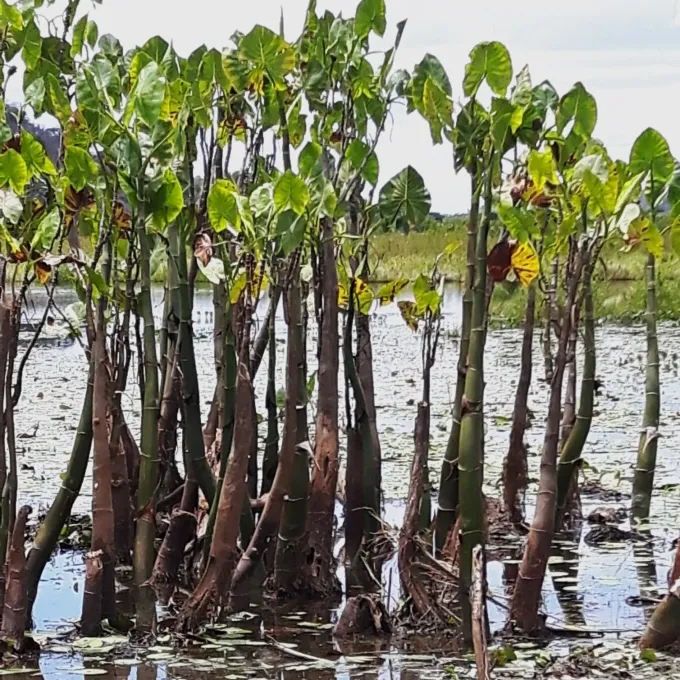
Montrichardia arborescens, commonly known as the giant arum, is a robust semi-aquatic plant belonging to the Araceae family. It naturally thrives in the tropical wetlands of Central and South America, often dominating the riparian zones and mangrove fringes where it establishes extensive root systems.
The plant is characterized by its woody, erect stem, which can reach heights of up to 4 meters. Its large, heart-shaped leaves provide a massive photosynthetic area, allowing it to dominate its ecological niche in nutrient-rich tropical swamplands.
Climatic requirements are strictly tropical, necessitating year-round high temperatures and humidity. The plant is extremely susceptible to cold damage and cannot survive in environments with frost or significant seasonal temperature drops.
Soil requirements revolve around permanently waterlogged, silty, or muddy substrates. It is exceptionally well-adapted to anaerobic soil conditions and can tolerate varying levels of salinity, making it a pioneer species in dynamic river delta environments.
Cultivation requires careful management of water levels, mimicking the natural inundation cycles of its native habitat. It does not tolerate drought and requires consistent moisture to maintain its structural integrity and growth rate.
Yield
The economic value of Montrichardia arborescens is primarily derived from its starchy rhizomes and seeds. Historically, these parts have been used as a food source in indigenous communities, provided they undergo rigorous processing to eliminate calcium oxalate crystals and other potential toxins.
Fiber production is another potential agricultural application. The stems contain durable fibers that have been investigated for use in artisanal papermaking and the production of rustic textiles, aligning with sustainable bio-material practices.
As a wetland stabilizer, the plant provides critical ecosystem services by preventing bank erosion and filtering agricultural runoff. This makes it a valuable asset in reforestation and ecological restoration projects in tropical riparian zones.
Research into its biomass yield suggests that it can produce significant organic matter in a short period. This capacity makes it a subject of interest for biofuels or soil amendment applications in areas where other traditional crops fail due to excessive water.
The harvest of wild or cultivated stands must be managed to maintain population viability. Sustainable harvesting techniques, combined with post-harvest processing improvements, are key to increasing its commercial viability as an unconventional tropical crop.
Main diseases and pests
Major threats include leaf-eating insects and various sap-sucking pests like aphids and whiteflies. These pests can cause significant damage to the leaf tissue, particularly in dense stands where natural predator control is insufficient.
Fungal pathogens are a persistent threat, especially in conditions of poor air circulation and extreme humidity. Fungal rot can quickly compromise the woody stem, leading to the rapid decay of mature plants if left untreated.
Environmental stress, such as sudden changes in water salinity or chemical contamination from neighboring farmland, can weaken the plant's natural defense mechanisms, making it more susceptible to infections and stunted growth.
Invasion by exotic aquatic plants can also pose a threat by outcompeting the species for sunlight and nutrients in confined cultivation areas. Maintaining an optimal growth environment is essential to keep the crop dominant.
Integrated pest management strategies are essential for sustainable production. Minimizing chemical pesticide use is crucial, as the plant grows in water systems where chemical runoff can have devastating effects on local biodiversity.