
Monopsis
Monopsis hybrids
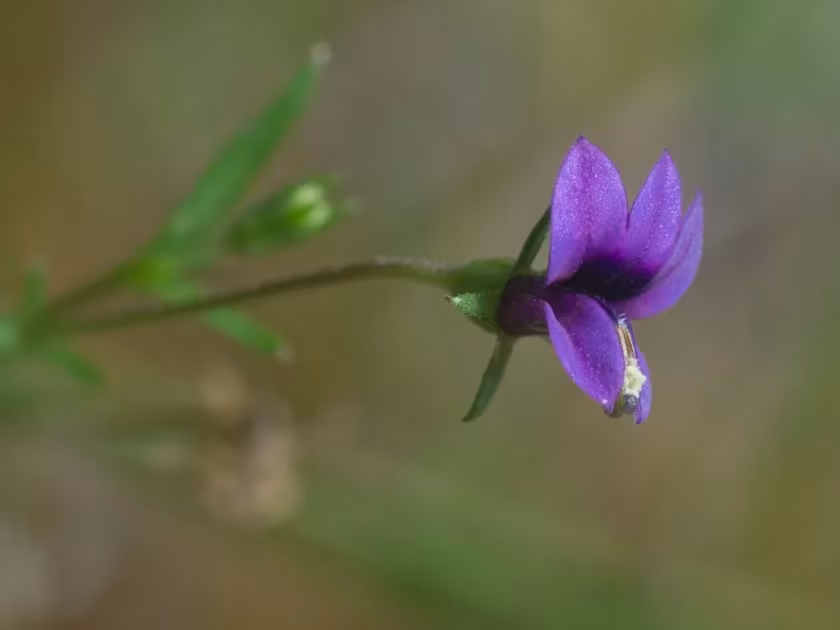
Description
Sowing dates
Monopsis hybrida belongs to the Campanulaceae family and is widely appreciated as a decorative flowering crop suitable for containers and garden beds.
Seed propagation is the standard method, with sowing performed in early spring under controlled indoor conditions to ensure a long flowering season.
The seeds are extremely fine and should be sown on the surface of a sterile potting mix without covering, ensuring light exposure for optimal germination.
Maintaining a temperature range of 18-22 degrees Celsius and high humidity under a cover is essential for successful seedling development.
Transplanting seedlings to their final location is carried out after the risk of frost has passed, ensuring they are placed in well-spaced rows or containers.
Growing requirements
Monopsis requires full sun exposure to produce the most vibrant blooms and maintain a compact, healthy growth habit throughout the growing period.
The ideal soil should be light, fertile, and exhibit excellent drainage, as the roots are sensitive to prolonged waterlogging in heavy, clay-based soils.
Consistent moisture is key, meaning irrigation should be frequent enough to prevent the substrate from drying out, while avoiding saturated conditions.
Balanced liquid fertilizers should be applied every two weeks during the active growing season to support the plant's metabolic processes and flowering intensity.
The crop performs best in moderate climates and should be protected from extreme heat waves, which can induce stress and reduce floral longevity.
Main diseases and pests
Aphids and spider mites are the most common pests that affect Monopsis, especially in dry and warm environments that favor their rapid reproduction.
Regular monitoring of the foliage is recommended to detect early infestations, which can be managed with biological or chemical control agents.
Root rot, often caused by overwatering or poor soil drainage, is a significant threat that can rapidly lead to the collapse of the plant.
Fungal diseases like powdery mildew may occur in poorly ventilated areas with high humidity, necessitating proper spacing and air circulation.
Sanitation practices, such as removing affected plant parts and keeping the area clean, are effective non-chemical strategies for disease prevention.