
Swan's-neck thyme-moss
Mnium hornum
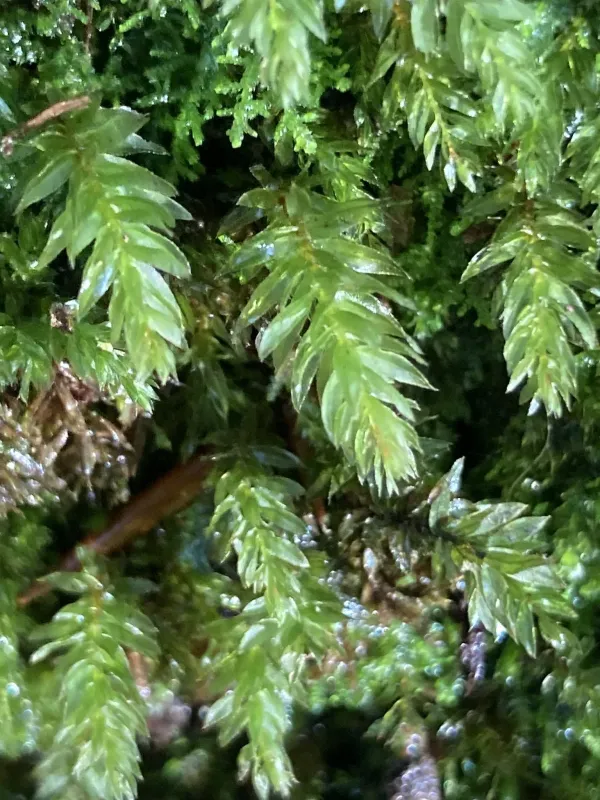
Description
Growing requirements
Mnium hornum, commonly known as Swan's-neck thyme-moss, belongs to the Mniaceae family. This bryophyte is widely distributed across the Northern Hemisphere, where it thrives in moist, shaded environments, particularly in woodland habitats and along stream banks.
The plant exhibits a distinct morphology with leafy shoots arising from a prostrate stem. Its leaves are notable for their thickened margins and a prominent costa that often extends into a small tip, which serves as a key identification feature for this species.
Cultivation requires strict adherence to environmental parameters, primarily high relative humidity and consistent substrate moisture. It thrives best in acidic, humus-rich environments, making it an excellent candidate for specialized indoor gardens and terrariums.
The agricultural management of this moss involves maintaining a cool, shaded environment away from direct light, which can bleach the plant. Substrate choice is critical; it must provide high moisture retention without becoming waterlogged or prone to anaerobic conditions.
In terms of usage, Mnium hornum is highly valued in the restoration of ecological micro-habitats and for aesthetic purposes in paludariums. Its ability to form dense, lush green carpets provides an authentic woodland texture in designed landscapes.
Main diseases and pests
The primary physiological threat to Mnium hornum is rapid dehydration. Because mosses lack a complex vascular system to transport water over long distances, they are highly vulnerable to fluctuating humidity levels and periods of drought.
Pest pressures include infestation by gastropods, such as slugs and snails, which can cause significant damage to the leaf tissue. Integrated pest management, focusing on physical barriers rather than chemical pesticides, is recommended to preserve the integrity of the colony.
Pathogenic fungi may proliferate in environments with stagnant air and excessive moisture, leading to damping-off of the stems. Proper airflow and regular monitoring of the substrate's drainage capacity are essential preventative measures.
Accumulation of minerals and salts from irrigation water poses a long-term risk to the health of the bryophyte colony. Using distilled or reverse osmosis water is vital to prevent the buildup of deposits that inhibit physiological processes.
Invasive algae or faster-growing vascular plant species present a competitive threat in managed systems. Regular manual removal of encroaching weeds ensures that the Mnium hornum colony maintains its dominance and aesthetic quality.