
Naked miterwort
Mitella nuda
Description
Growing requirements
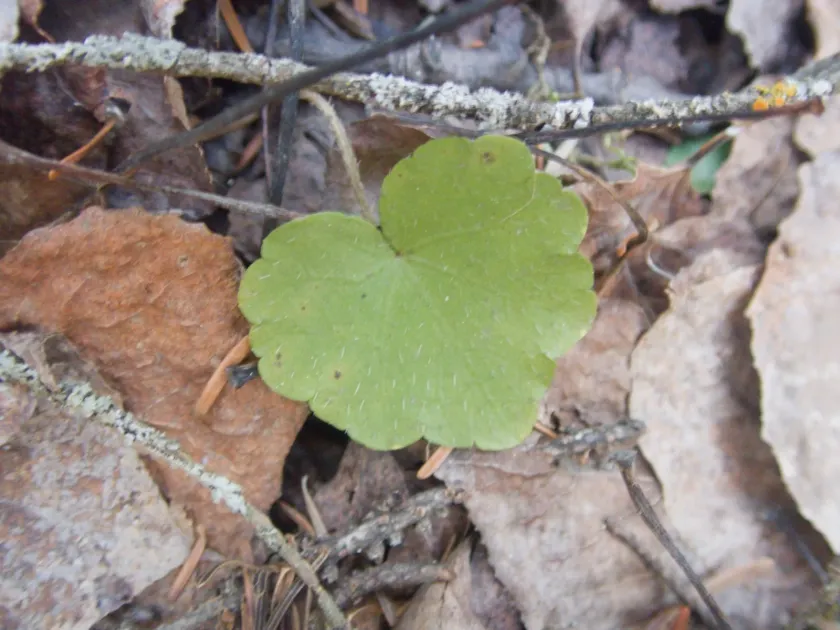
Naked miterwort (Mitella nuda) is a herbaceous perennial belonging to the Saxifrage family (Saxifragaceae). It is a delicate woodland plant that propagates through slender, creeping rhizomes, forming dense mats across the forest floor.
Native to the boreal forests of North America and Eurasia, this species is well-adapted to cool, damp environments. It thrives in locations with consistent soil moisture and is frequently found in mossy habitats under the canopy of coniferous trees.
For cultivation, Mitella nuda requires rich, organic, and well-drained soils. The substrate should mimic the natural forest floor, maintaining a slightly acidic to neutral pH. High organic content is essential to support its shallow, non-aggressive root system.
The plant is highly shade-tolerant, making it an excellent choice for northern or eastern garden exposures where sunlight is limited. It requires protection from heat and dry air, which can quickly dehydrate the plant during the summer months.
In landscape design, it serves as a unique groundcover for shady rock gardens or woodland-style borders. Its small, fringed flowers, which bloom in late spring, provide a subtle beauty that complements ferns and other shade-loving vegetation.
Main diseases and pests
The primary concern for Mitella nuda is root rot caused by poor soil drainage. When the substrate becomes waterlogged and lacks aeration, the rhizomes may decay rapidly, particularly during the dormant season when evaporation rates are low.
Fungal infections such as Botrytis may appear in overly humid and stagnant air conditions. Improving air circulation around the plants and avoiding overhead watering can significantly reduce the risk of these common pathogens affecting the foliage.
Slugs and snails are the most prominent pests, often targeting the soft, fleshy leaves of the miterwort. Integrated pest management strategies, such as physical barriers or environmentally safe bait, are effective in controlling damage in residential gardens.
Stress resulting from improper site selection often leaves the plant susceptible to secondary attacks from aphids or mites. Regular monitoring during the active growth phase is recommended to detect any signs of infestation at an early stage.
Winter damage to the root system is rare due to the plant's adaptation to cold climates, but erratic freeze-thaw cycles without snow cover can sometimes cause frost heaving. A thin layer of natural mulch can help protect the surface roots.