
Miterwort
Mitella diphylla
Description
Growing requirements
Miterwort (Mitella diphylla) is a perennial herbaceous plant belonging to the Saxifragaceae family. Native to the woodlands of North America, this species is well-adapted to moist, shaded environments, often found along stream banks and on nutrient-rich forest floors.
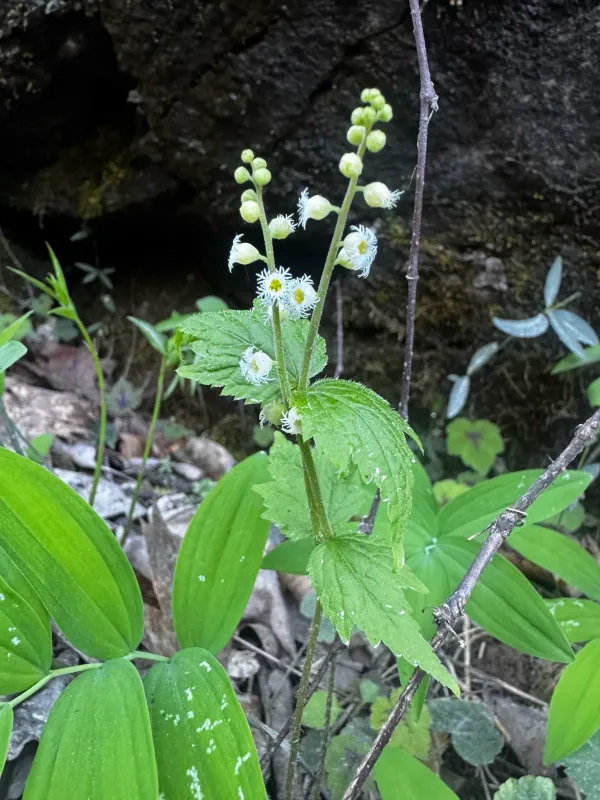
Botanically, the plant is characterized by a basal rosette of heart-shaped leaves and tall, slender racemes of small, fringed white flowers. The species name refers to the two sessile leaves that occur on the flower stem, providing a distinct appearance during the blooming season in late spring.
To cultivate Miterwort successfully, gardeners must mimic its native habitat. It requires a location in full to partial shade, as exposure to intense, direct sunlight will cause severe wilting and leaf scorch during the summer months.
The soil should be rich in organic matter, slightly acidic, and consistently moist. It is vital that the soil remains well-drained to prevent root suffocation, as the plant cannot tolerate waterlogged conditions for extended periods.
In landscaping, this plant serves as an excellent groundcover for woodland gardens, rockeries, and shady borders. Its delicate structure makes it an ideal companion for ferns and hostas, providing a refined aesthetic contrast to broader-leaved shade plants.
Main diseases and pests
The primary threat to the health of Mitella diphylla is fungal infection resulting from poor air circulation or stagnant water in the soil. Proper site selection and ensuring light, friable soil texture are the most effective preventive measures against root issues.
Slugs and snails are the most significant pests for this species, particularly during humid seasons. Gardeners can protect their plants by maintaining a tidy growing area and using perimeter barriers, which effectively discourage these mollusks from grazing on the foliage.