
Lesser snapdragon
Misopates orontium
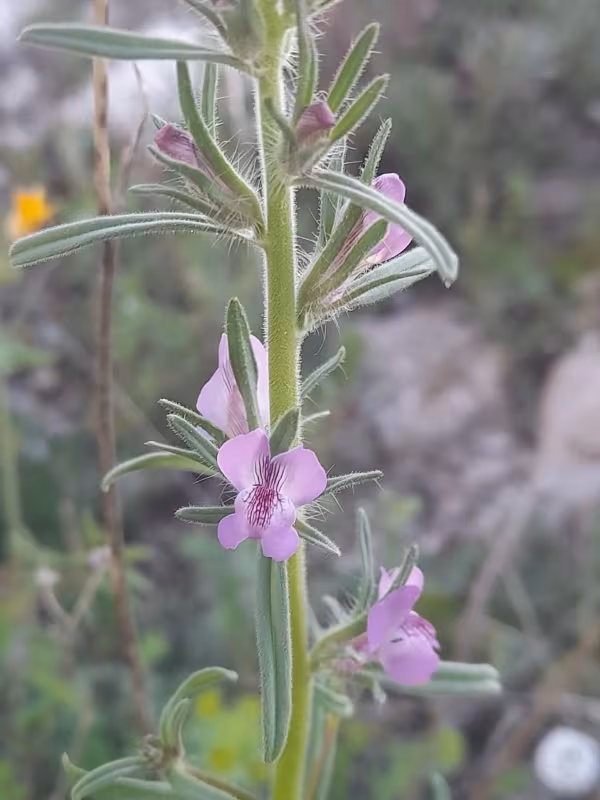
Description
Sowing dates
The lesser snapdragon (Misopates orontium) is an annual herbaceous plant belonging to the Plantaginaceae family. It propagates exclusively through seeds, which are highly resilient and capable of remaining viable in the soil for several years.
Seed germination typically occurs in early spring when soil temperatures reach 10 to 12 degrees Celsius. In regions with mild winter climates, the plant may germinate in late summer or autumn, overwintering as a small rosette of leaves before rapid spring growth.
This weed shows significant plasticity in its germination timing, which complicates management in arable fields. Its ability to emerge at various times requires a strategic approach to cultivation and herbicide application to ensure effective control.
Superficial soil preparation in early spring is an effective method to induce germination, allowing farmers to eliminate the seedlings during pre-sowing cultivation. This practice significantly reduces the weed burden on the upcoming crops.
The biological strategy of this species involves producing a large quantity of seeds, ensuring its persistence in the seed bank. Consequently, preventing seed set is a critical component of successful long-term management in any cropping system.
Growing requirements
Lesser snapdragon thrives in light-textured soils, particularly sandy and loamy-sand soils, where competition from other fast-growing species is reduced. It demonstrates moderate drought tolerance due to its deep root system, allowing it to survive in dry periods.
Light availability is a crucial factor for its development; thus, it is most prolific in well-lit areas. In dense crop stands, shading from taller plants effectively inhibits its growth, which is a key advantage of competitive farming practices.
The plant has moderate requirements for soil pH, showing successful adaptation to both neutral and slightly acidic substrates. While it does not demand high soil fertility, it can grow very vigorously on nutrient-rich lands if not properly managed.
Climatic requirements involve moderate humidity and sufficient warmth during the growing season. The species is widely distributed across temperate and subtropical regions, easily adapting to various disturbed soil conditions in agricultural landscapes.
Agricultural management should focus on maintaining high crop vigor and proper crop rotation. Utilizing modern selective herbicides, when necessary, remains the most effective way to manage populations exceeding the economic threshold.
Main diseases and pests
As a member of the Plantaginaceae family, the lesser snapdragon can serve as a reservoir for various phytopathogens that affect other valuable crops. Wind-borne fungal spores often accumulate on these weeds, creating a source for infection.
Insect pests, such as aphids or certain weevil species, often feed on the vegetative parts of the plant. While they rarely cause complete mortality, they provide entry points for secondary bacterial and fungal infections that can weaken the plant and spread to crops.
The persistence of the species in the field often leads to a continuous cycle of reinfection if sanitary measures are ignored. It is essential to manage the species in hedge rows and field margins to maintain a healthy phytosanitary environment.
Fungal diseases are particularly prevalent in wet conditions, and the lesser snapdragon acts as a host for pathogens that thrive in such microclimates. Managing weed density is vital to reducing the overall disease pressure on the field.
- Downy mildew causing leaf tissue necrosis.
- Powdery mildew reducing overall plant vigor.
- Root rots occurring in areas with poor drainage or waterlogging.