
African teak
Milicia excelsa
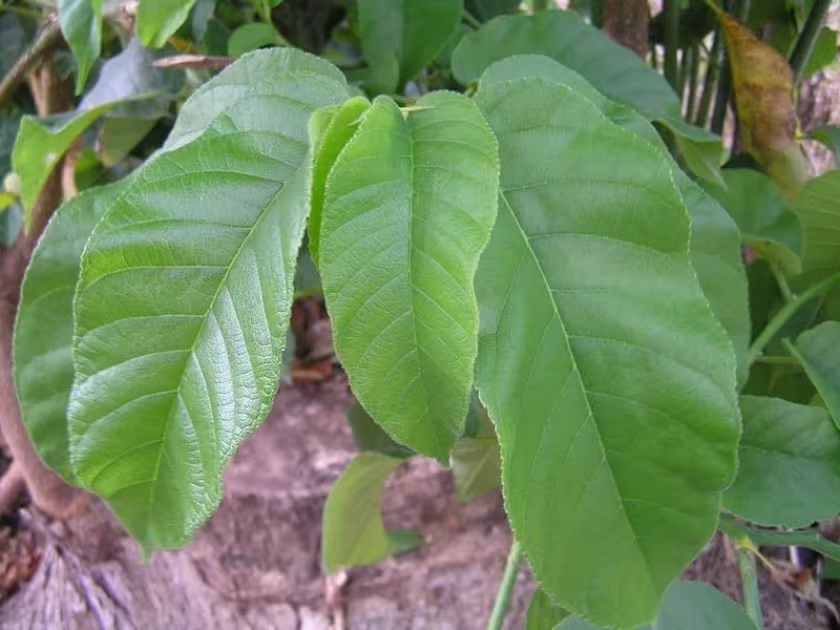
Description
Sowing dates
Propagation of Milicia excelsa typically begins with seeds, which require warm and moist conditions to achieve successful germination.
In forestry practices, seeds are often sown in nursery beds, allowing seedlings to develop sufficient strength before being transplanted to the field.
The optimal time for establishing new stands is at the onset of the rainy season, ensuring that young trees have immediate access to moisture.
Because the seeds have a limited shelf life, immediate sowing after collection is recommended to maximize the rate of germination.
Careful site preparation and weed management are essential during the initial growth phases to provide a competitive advantage to young saplings.
Growing requirements
As a member of the Moraceae family, Milicia excelsa is a tropical hardwood that demands specific climatic conditions for healthy development.
The tree thrives in regions with abundant rainfall and consistently high temperatures throughout the entire year, favoring stable tropical environments.
It prefers deep, fertile, and well-drained soils, as it is highly sensitive to waterlogged ground which can lead to root system degradation.
Being a light-demanding species, it requires adequate spacing in plantations to develop a large, healthy canopy and optimize photosynthetic potential.
While mature trees show some drought tolerance, consistent moisture remains critical for fast growth rates and the production of high-quality timber.
Yield
Milicia excelsa is primarily cultivated for its valuable timber, which is globally recognized in the furniture and construction industry as Iroko.
The trees are capable of reaching impressive dimensions, often growing up to 50 meters in height with a massive diameter of two meters.
It displays a relatively rapid growth rate for a high-density tropical hardwood, making it a viable candidate for sustainable forest management.
The wood is highly sought after for its durability, resistance to rot, and attractive golden-brown color, which deepens with age after processing.
Well-managed stands produce significant yields per hectare, supporting long-term economic returns in the tropical hardwood sector.
Main diseases and pests
The most significant pest threat to Milicia excelsa plantations is the gall-forming psyllid Phytolyma lata, which attacks young shoots and buds.
Severe infestations by this pest can cause stunted growth and stem malformation, significantly reducing the commercial value of the final timber.
Fungal diseases can also impact the tree in high-humidity conditions, particularly where poor aeration or overcrowding exists within the plantation.
Competition from aggressive invasive weeds can suppress the development of young saplings, often leading to high mortality rates if left unmanaged.
Control strategies involve regular monitoring, the use of resistant genotypes where possible, and strict adherence to silvicultural best practices.
Harvesting
Harvesting of Iroko usually takes place once the trees reach physical maturity, typically after 50 to 80 years of growth in a plantation setting.
The felling process requires precise handling to ensure the extraction of high-grade logs without compromising the structural integrity of the wood.
Proper seasoning is a mandatory step after harvest, as the wood requires careful drying to prevent warping or checking before it can be crafted.
Due to its natural oil content and density, the harvested timber is naturally resistant to decay and requires minimal chemical treatment.
Final applications of the wood include high-end cabinetry, boat building, durable flooring, and exterior structural elements for luxury architecture.