
Microgramma nitida
Microgramma nitida
Description
Growing requirements
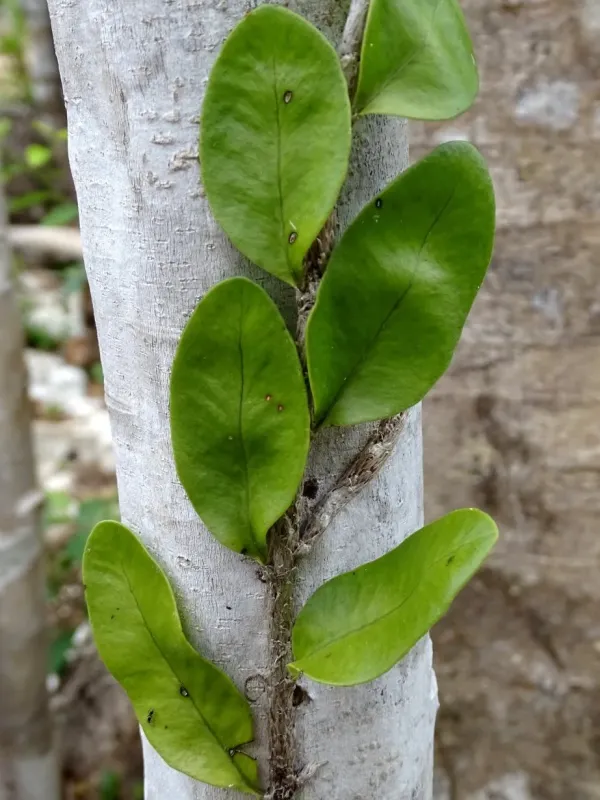
Microgramma nitida is an epiphytic fern belonging to the Polypodiaceae family. Native to the tropical regions of South America, this plant has adapted to life on tree trunks, developing a creeping rhizome that spreads across the bark surface.
To cultivate this plant successfully, one must replicate its natural tropical environment. It thrives in high humidity and requires a location with bright, indirect light, as direct sunlight can easily scorch its delicate foliage.
The choice of substrate is fundamental to its health. As an epiphyte, it requires an extremely porous and well-draining medium. A mix consisting of pine bark, sphagnum moss, and charcoal is considered the gold standard for supporting its root structure.
Temperature control is essential for long-term survival. The plant prefers consistent temperatures between 18 and 24 degrees Celsius. It is highly sensitive to cold drafts, which can cause severe physiological stress and leaf drop.
Watering practices must be meticulous; while the plant requires consistent moisture, waterlogging is fatal. It is best to water when the surface of the medium feels slightly dry, ensuring that excess water can drain away completely from the pot.
Main diseases and pests
Common pests that plague this fern include spider mites and scale insects. These pests often flourish in indoor environments where the air is too dry, making regular misting a vital part of the plant’s health maintenance routine.
Fungal infections of the rhizome are common when the substrate remains overly saturated for extended periods. Once root rot sets in, the plant struggles to uptake nutrients, leading to the yellowing and wilting of the fronds.
Air stagnation can also lead to fungal outbreaks on the leaves. Providing moderate airflow without creating strong drafts helps maintain the plant's structural integrity and prevents the development of spores.
- Monitor for small, web-like structures on the undersides of leaves.
- Check for brown or black spots on the rhizome.
- Remove any necrotic tissue to prevent the spread of decay.
In cases of infestation, treatment should involve horticultural soap or neem oil applications. It is crucial to avoid heavy chemical pesticides, as ferns are notoriously sensitive to chemicals and can suffer phytotoxicity.