
Micranthemum micranthemoides
Micranthemum micranthemoides
Description
Growing requirements
Micranthemum micranthemoides, commonly known as Pearlweed, belongs to the Phrymaceae family. It is indigenous to the wetlands of North America, where it thrives in moist substrates and shallow water environments with high atmospheric humidity.
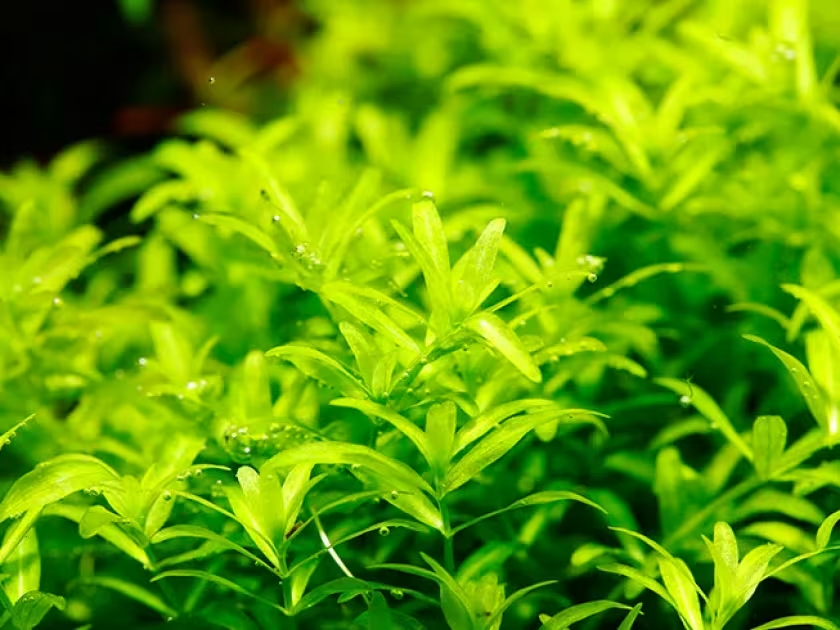
This plant is characterized by its delicate, bright green stems and tiny, oval-shaped leaves arranged in whorls. It is highly valued in horticulture for its versatility, as it can be grown as a dense foreground carpet or as a lush midground bush depending on pruning techniques.
Successful cultivation requires high-intensity lighting to prevent the stems from becoming leggy and reaching for light. A light spectrum suitable for photosynthesis is crucial for maintaining the vibrant, compact structure of the plant's foliage.
The culture thrives in water temperatures between 20°C and 28°C. It requires a substrate rich in essential nutrients and a consistent supply of carbon dioxide (CO2) to accelerate metabolic processes and ensure vigorous growth rates throughout the year.
Water quality parameters must remain stable, with a focus on low to medium hardness. Frequent water changes are recommended to prevent the accumulation of organic waste, which can inhibit the plant's ability to absorb micronutrients directly from the water column.
Harvesting
Harvesting for this crop is synonymous with maintenance pruning. Regularly trimming the apical meristems encourages the development of lateral shoots, which is essential for creating a thick, uniform carpet. The clipped trimmings serve as healthy cuttings for future propagation, which is the primary method of expanding the plant population.