
Mezoneuron sumatranum
Mezoneuron sumatranum
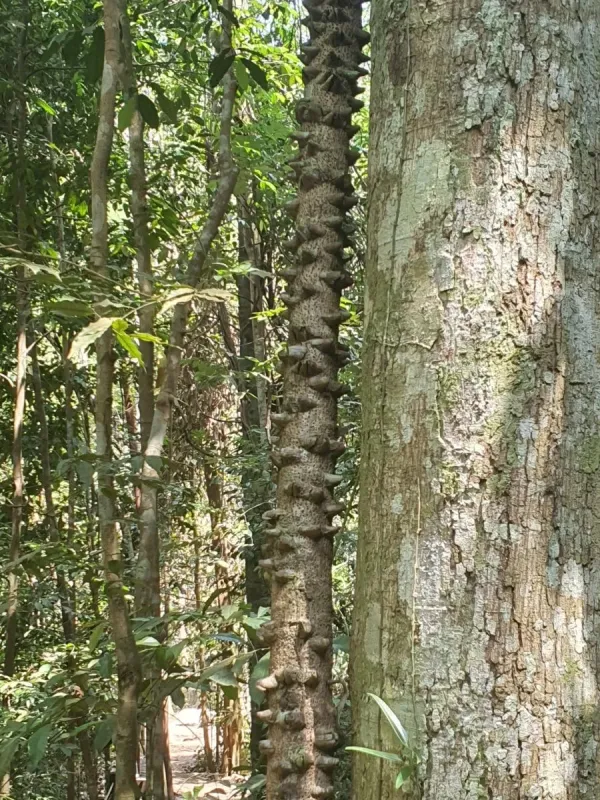
Description
Sowing dates
Mezoneuron sumatranum, often identified as Caesalpinia sumatrana, is a significant member of the Fabaceae (legume) family. Propagation is primarily carried out via seeds, which require specific scarification techniques to break dormancy and ensure uniform germination.
Sowing in nurseries should coincide with the beginning of the rainy season to provide sufficient moisture for the emerging seedlings to establish a strong root system.
Transplanting seedlings to the final plantation site should occur once they reach a height of approximately 30 to 50 centimeters, ensuring adequate spacing between individual trees to promote proper canopy development.
During the initial stages of establishment, consistent monitoring and removal of weeds within the root zone are essential to reduce competition for nutrients and water.
Seeds maintain their viability when stored in cool, dry conditions, though using fresh seeds remains the best practice for establishing healthy, high-yield plantations.
Growing requirements
This species is native to the humid tropical forests of Southeast Asia, thriving in regions with high ambient humidity and consistent temperatures throughout the year.
The ideal soil conditions include fertile, well-drained loams or sandy loams with a neutral to slightly acidic pH level. Waterlogged soils should be strictly avoided as they can lead to root degradation.
Mezoneuron sumatranum is a light-demanding species. For optimal biomass production and healthy structural growth, the trees must be planted in areas receiving full sunlight.
While the species is adapted to tropical climates with high annual rainfall, it exhibits a moderate level of tolerance to short dry spells once the root system has matured.
To maximize growth rates, integrating organic matter into the soil profile during site preparation is recommended, as this enhances moisture retention and provides essential nutrients.
Yield
The primary economic value of Mezoneuron sumatranum lies in its high-quality, durable timber, which is highly sought after for furniture making, internal construction, and specialized woodworking projects.
Beyond wood production, the species contributes to agricultural sustainability through nitrogen fixation, which improves soil fertility for adjacent or subsequent intercropped species.
When managed in agroforestry systems, these trees serve as efficient windbreaks, protecting more sensitive crops from physical damage and creating a favorable microclimate.
Yield metrics for timber are generally high, with the species demonstrating rapid growth rates in its natural range compared to other hardwood varieties.
The tree's aesthetic qualities also make it a potential candidate for ornamental use in large-scale park landscaping or buffer zone reforestation projects.
Main diseases and pests
The most common threats include infestation by leaf-eating caterpillars and various defoliating insects that can significantly reduce photosynthetic capacity in younger plants.
Fungal diseases, including leaf spot and various root rots, are prevalent in environments with poor air circulation or excessive soil moisture, necessitating strict adherence to spacing and drainage protocols.
Stem-boring insects may pose a risk to older trees, requiring regular health checks and the removal of compromised branches to prevent the spread of infestations across the plantation.
Integrated pest management (IPM) strategies, which combine biological control with cultural practices, are highly recommended to mitigate these risks while maintaining environmental sustainability.
Maintaining high hygiene standards in the nursery and the plantation, such as disinfecting tools and clearing plant debris, is vital for preventing the outbreak of soil-borne pathogens.
Harvesting
Timber harvesting involves selective felling of mature trees, typically after 20 to 25 years, when the trunks have reached the desired merchantable diameter and density.
Harvesting operations should be planned carefully to ensure the long-term sustainability of the stand, often following a rotation cycle that allows for continuous yield while protecting the ecosystem.
After felling, the timber must undergo a controlled drying process to stabilize the wood and prevent warping, given its high density and structural properties.
Logging residues, such as smaller branches and bark, can be processed into mulch or organic compost, returning essential nutrients back to the soil.
Implementing modern, low-impact harvesting techniques helps to preserve the soil structure and minimizes disturbance to the surrounding environment during the collection of logs.