
Uhi
Mezoneuron kauaiense
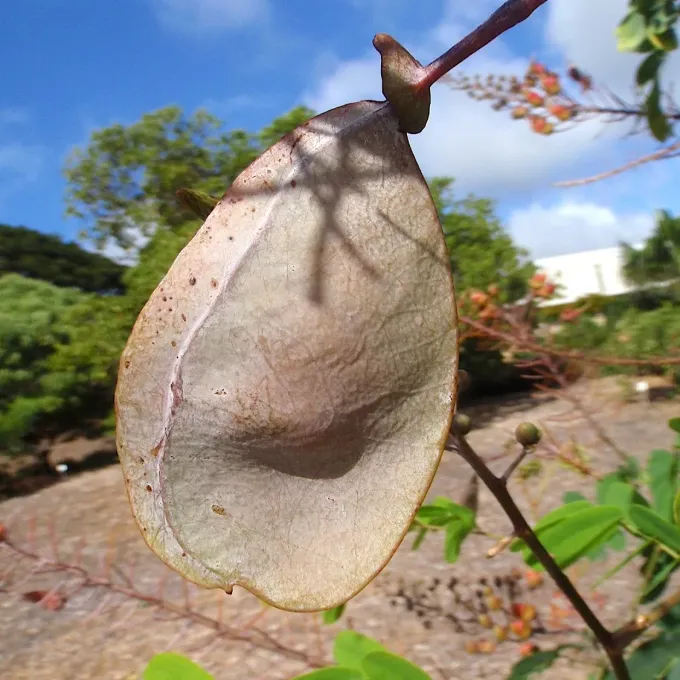
Description
Growing requirements
Mezoneuron kauaiense, commonly referred to as Uhi, is a distinguished species of tree belonging to the Fabaceae (legume) family. This species is indigenous to the Hawaiian Islands, where it thrives primarily in the dry forest regions at elevations ranging from 200 to 800 meters above sea level.
The culture is highly specialized for arid to semi-arid environments, demonstrating impressive resilience against drought conditions. It favors well-drained volcanic soils that offer structural stability for its expansive root network, which is vital for surviving long rainless seasons typical of its native habitat.
For optimal growth, Uhi requires full sun exposure and warm tropical temperatures throughout the year. It does not tolerate waterlogged soil, as the species is highly susceptible to root decay when subjected to poor drainage conditions or excessive humidity during the initial growth stages.
Agrotechnical management involves careful selection of planting sites that mimic its natural ecological niche. Providing enough space for canopy development is essential, as mature trees can grow quite large, requiring significant vertical and horizontal clearance to prevent overcrowding.
Maintenance of young stands requires stringent protection against invasive species, particularly feral ungulates that can decimate young saplings. Supplementary irrigation may be required in the first two years of development until the plant establishes a deep root system capable of sourcing groundwater independently.
Harvesting
The primary economic and cultural utility of Mezoneuron kauaiense lies in its high-density, durable timber. Historically, the wood was prized by native Hawaiians for crafting tools, weapons, and decorative items due to its dark, lustrous color and exceptional hardness.
Harvesting strategies are nowadays strictly controlled to align with conservation efforts, as the species is categorized as rare. Sustainable harvesting involves selective thinning of plantations or salvaging fallen timber, ensuring that the primary forest populations remain undisturbed and protected.
Post-harvest treatment requires precision, as the dense wood is prone to checking if dried too rapidly. Proper kiln-drying or slow air-drying techniques are employed to stabilize the moisture content, ensuring the timber retains its integrity for high-end woodwork and traditional artistry.
The tree also provides ecological services, including nitrogen fixation, which contributes to the improvement of soil health in plantation environments. By integrating Uhi into agroforestry systems, managers can support soil fertility while promoting the recovery of endangered plant biodiversity.
Seed collection is another critical aspect of the lifecycle, often involving scarification processes to overcome seed coat dormancy. By producing viable seeds in controlled environments, nurseries play an essential role in re-establishing Uhi populations in their historical range across Hawaii.