
Metzgeria leptoneura
Metzgeria leptoneura
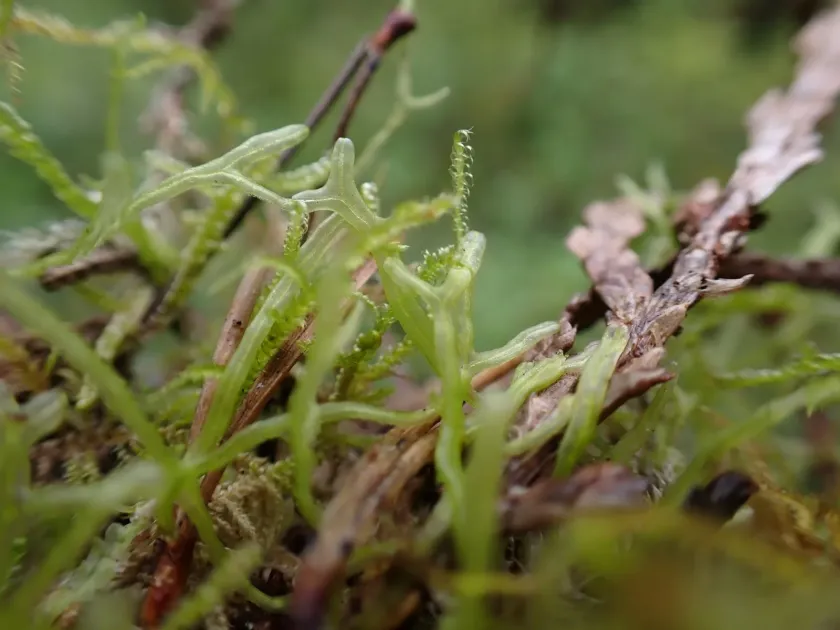
Description
Growing requirements
Metzgeria leptoneura is a species of liverwort belonging to the family Metzgeriaceae. It is a non-vascular, spore-producing plant that holds significant value in forestry and ecology rather than industrial agriculture, as it possesses very specific requirements for its growth environment.
The plant thrives in extremely humid and shaded environments, typically found in temperate and tropical rainforests. It commonly grows as an epiphyte on tree trunks or on moist rocks, requiring constant atmospheric humidity to prevent desiccation and maintain its biological processes.
In terms of climate, Metzgeria leptoneura prefers stable, cool, and damp conditions. It is highly sensitive to environmental pollution and air quality, making it a valuable bioindicator for forest health. It cannot tolerate direct sunlight or dry, windy conditions that would compromise its cellular structure.
The substrate must provide high water retention, which is why it is almost exclusively found in undisturbed, primary or old-growth forests. It does not have an agricultural cycle; its growth is slow and entirely dependent on the natural succession of its forest environment.
Conservation of this species is essential for maintaining local biodiversity. As a non-crop plant, it plays a vital role in capturing moisture and providing micro-habitats for various organisms within the bark-dwelling community, thus supporting the complexity of the forest ecosystem.