
Forked veilwort
Metzgeria furcata
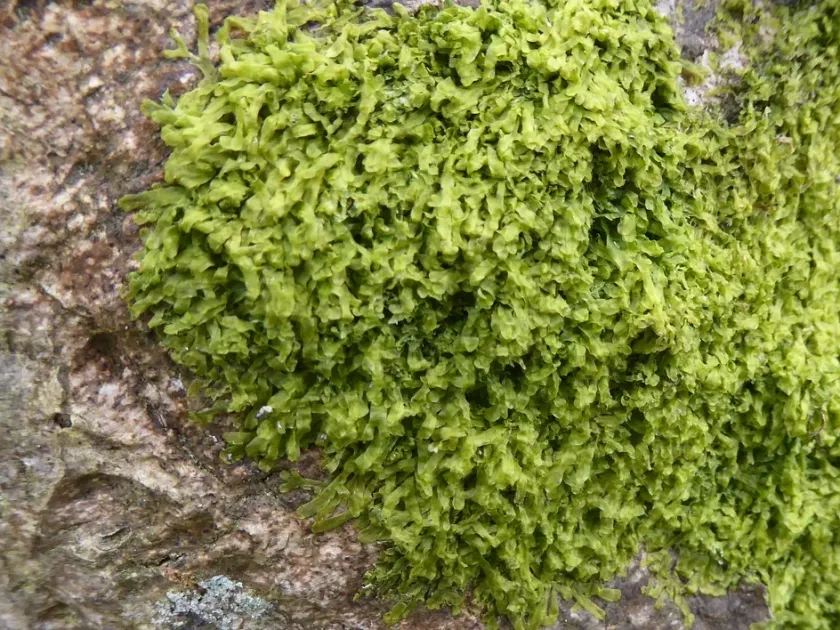
Description
Growing requirements
Forked veilwort (Metzgeria furcata) is a liverwort species belonging to the Metzgeriaceae family. It is not an agricultural crop but a significant botanical organism found primarily in forest ecosystems as an epiphyte on tree bark, rocks, and occasionally damp soil.
Botanically, it features a thalloid structure with dichotomous branching, typically appearing as light green ribbons. The plant lacks a true root system and relies on surface absorption of atmospheric moisture, making it highly dependent on humid environments.
This species is native to temperate regions and requires shaded, high-humidity habitats to flourish. It plays an essential role in the micro-ecosystem of tree trunks, contributing to the biodiversity of old-growth forests.
There are no agricultural practices or sowing requirements for this plant as it grows naturally in wild conditions. Its cultivation is not performed for commercial purposes, though it is studied for its ecological value.
The primary utility of the Forked veilwort lies in environmental monitoring. Because it lacks a cuticle and directly absorbs environmental toxins, it serves as a sensitive bioindicator for air quality, especially regarding sulfur dioxide levels.
Main diseases and pests
The main threat to the survival of Metzgeria furcata is atmospheric pollution. Industrial emissions, particularly sulfur dioxide, cause rapid degradation and death of the plant thallus, leading to its disappearance from affected areas.
Deforestation and forest clearing present a severe challenge to its habitat. The loss of canopy shade reduces humidity, which is critical for the plant, eventually leading to local extinction as the substrate dries out.
Climate change and prolonged droughts pose significant risks to the population. Since the plant depends on consistent moisture, excessive dryness inhibits its physiological processes and reproduction capabilities.
Interspecific competition with faster-growing mosses or lichens may occur if environmental conditions deviate from the species' preference. There are no known significant agricultural pests or diseases that target this species.
Conservation efforts for Metzgeria furcata focus on habitat preservation rather than active cultivation. Maintaining stable forest microclimates and improving air quality are the only effective ways to protect these sensitive liverwort populations.