
Canadian moonseed
Menispermum canadense
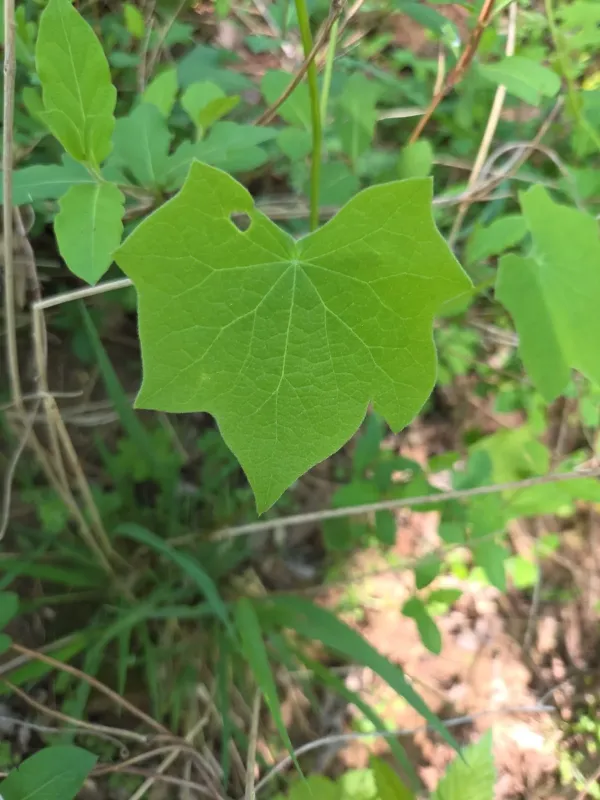
Description
Growing requirements
The Canadian moonseed (Menispermum canadense) is a hardy perennial climbing vine belonging to the Menispermaceae family. This vigorous plant is renowned for its rapid growth rate and its ability to cover fences and walls.
Originating from North America, this species is typically found in moist woods and along riverbanks. It has evolved to thrive in temperate climates, showing excellent cold tolerance and an ability to adapt to various environmental conditions.
To ensure optimal development, Canadian moonseed requires fertile, well-draining soil. While it is somewhat flexible, it performs best in rich loams where moisture is consistent but not stagnant, avoiding waterlogged conditions.
The plant thrives in partial shade or dappled light conditions. While it can withstand some sun exposure, it prefers protected areas, such as the north or east side of a structure, where the foliage is shielded from scorching afternoon heat.
Agricultural management involves providing vertical support systems to guide its climbing habit. Propagation is most efficiently achieved through the division of rhizomes during the dormant season, ensuring consistent expansion in garden settings.
Main diseases and pests
Canadian moonseed is relatively resistant to common garden pests, largely due to the presence of secondary metabolites in its tissues that discourage feeding. This inherent protection reduces the need for chemical intervention.
Despite its robustness, the plant can be susceptible to fungal diseases if air circulation is poor or if the foliage remains excessively wet for long periods. Proper spacing and training are essential to mitigate these risks.
A critical management factor is the plant's toxicity. All parts of the vine, especially the dark blue-black fruit, contain alkaloids that are harmful if ingested. Therefore, it should not be planted near edible garden zones.
Regular maintenance involves pruning dead or excessive growth to maintain the plant's structural integrity. This prevents the vine from becoming too heavy or creating unmanaged thickets that could harbor pests.
Weed management is vital during the establishment phase. Once the vine is fully established, its dense canopy often suppresses competing vegetation, reducing the need for constant soil cultivation near the base of the plant.