
Melolobium candicans
Melolobium candicans
Description
Growing requirements
Melolobium candicans is a perennial shrub species belonging to the Fabaceae family. Native to the semi-arid regions of Southern Africa, this plant has evolved to thrive in environments where water scarcity is the limiting factor for most vegetation.
The species is well-adapted to sandy and rocky soil types, which provide the excellent drainage necessary for its root system. It is highly sensitive to waterlogging, making proper site selection in terms of elevation and drainage a top priority for agricultural management.
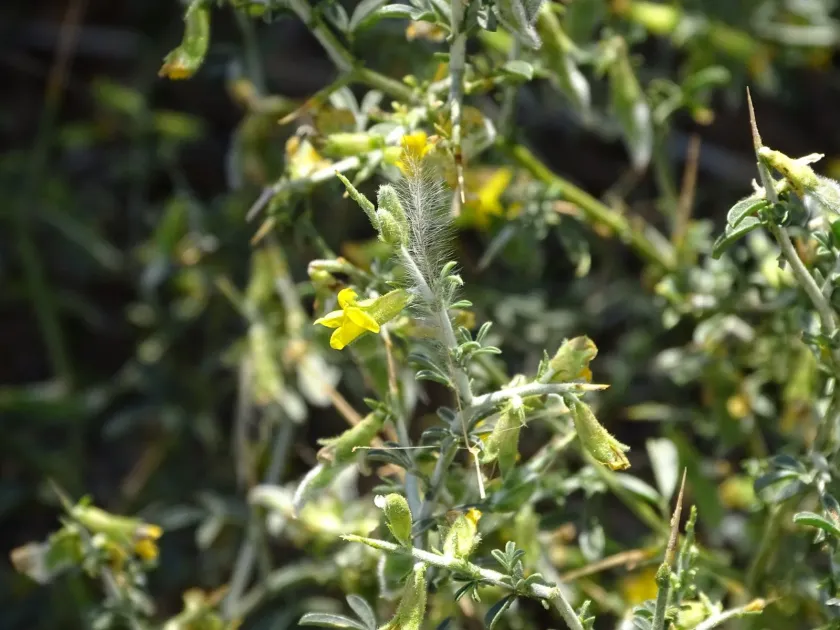
Full sun exposure is a fundamental requirement for the development of the plant. Its leaves, which are covered in fine, silvery hairs, are a structural adaptation designed to reflect intense solar radiation and mitigate the effects of extreme temperatures.
The plant possesses the characteristic ability of legumes to fix atmospheric nitrogen via root nodules. This feature makes it highly beneficial for soil enrichment projects, particularly in degraded lands that lack basic nutrients for conventional farming.
From an agricultural perspective, it serves as a robust component of pastoral ecosystems. It provides a source of biomass that remains available during the dry season, contributing to the stability of local livestock production systems.
Main diseases and pests
Pathogenic threats are primarily associated with high moisture levels. In humid or waterlogged conditions, the plants become highly susceptible to fungal infections, which manifest as root and crown rots that can devastate an entire stand.
Insect pests, including various species of weevils and leaf beetles, represent the most common biological threat. These pests target the foliage and reproductive structures, directly reducing the plant's overall productivity and vigor.
Weed competition is a significant challenge during the seedling establishment phase. Because Melolobium candicans displays slow early growth, it requires consistent maintenance to ensure that fast-growing weeds do not outcompete the young shrubs for resources.
Locust swarms are an occasional but significant environmental stressor in its natural distribution area. These events can result in complete defoliation, though established plants often possess the resilience to recover once the threat has passed.
Overgrazing poses a long-term threat to the survival of the species. Management plans must include controlled grazing rotations to prevent the total depletion of carbohydrate reserves in the root systems of the plants.