
White horehound
Marrubium vulgare L.
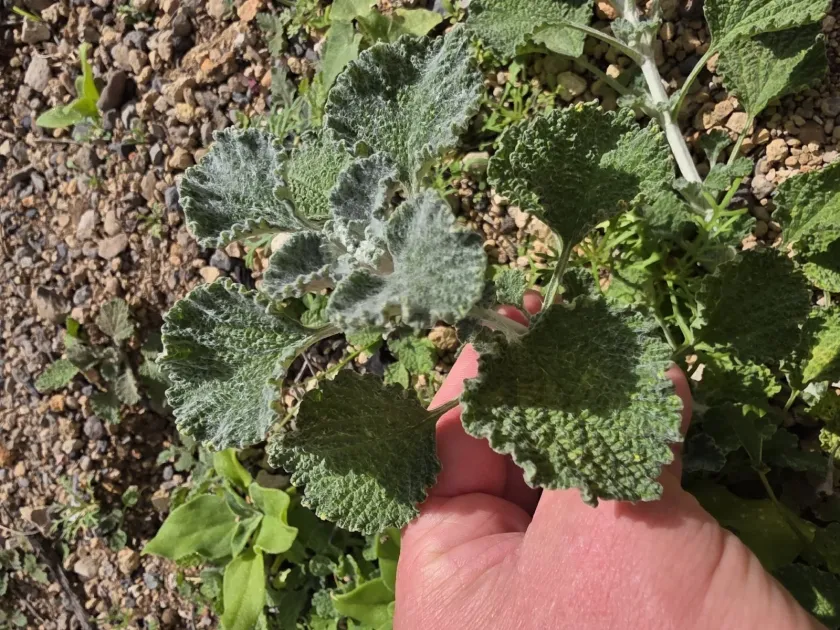
Description
Sowing dates
White horehound (Marrubium vulgare L.) is a perennial herbaceous plant belonging to the Lamiaceae family. It is typically propagated through seeds, which can be sown directly in the field or started in a greenhouse for later transplanting.
The optimal sowing time for direct seeding is in early spring once the soil temperature is stable. Seeds should be sown at a shallow depth of about 1 cm as they require some light exposure to germinate effectively in moist soil conditions.
For greenhouse cultivation, seeds are sown in late winter to prepare seedlings. Once the danger of frost has passed, these are transplanted into the field, spaced approximately 40 cm apart to ensure adequate airflow and prevent overcrowding of the growing plants.
Growth is relatively slow during the first year as the plant focuses on establishing a robust root system and a dense leaf rosette. Full-scale production and optimal herb yields are usually achieved starting from the second year of cultivation.
Selecting a sunny location is critical for success. White horehound requires plenty of sunlight to thrive and produce the essential oils and bitter compounds that define its quality as a medicinal and industrial crop.
Growing requirements
This crop is remarkably adaptable and thrives in light, well-drained soils, preferably with a neutral or slightly alkaline pH. Heavy or waterlogged soils are detrimental and should be avoided, as they significantly increase the risk of root rot.
White horehound is well-known for its excellent drought tolerance once established. It is an ideal plant for cultivation in semi-arid regions or areas where water resources for irrigation are limited, as it can survive extended dry spells.
The plant grows best at temperatures ranging from 15 to 25 degrees Celsius. It is quite hardy, capable of surviving winter conditions in temperate zones, provided the soil remains well-drained to prevent ice formation around the crown.
General management involves regular weed control, especially during the early growth stages, as the plant is a poor competitor against aggressive weeds. Mechanical hoeing between rows is recommended to improve soil aeration and nutrient uptake.
Fertilization should be handled with care. Excess nitrogen should be avoided as it stimulates excessive leafy growth at the expense of medicinal quality. A balanced, low-nitrogen approach is best for sustaining long-term health and potency.
Yield
The yield of white horehound depends largely on the age of the stand and the density of planting. Under proper management, plants can be harvested for several years, with peak yields occurring in the second and third seasons.
Commercial yields typically range from 2 to 3 tonnes of dry herb per hectare. Variability is usually dictated by the quality of the soil, the density of the planting, and the strict adherence to the harvest schedule during the flowering phase.
The primary use of the plant is in the pharmaceutical and food industries. It is widely recognized for its expectorant properties, derived from the compound marrubin, which is effective in treating respiratory conditions and coughs.
Besides medicine, white horehound is used to flavor various beverages, syrups, and confectionery products, particularly traditional cough drops. These diverse applications ensure a steady demand for high-quality dried herb on the international market.
Industrial processing involves carefully drying the harvested tops to maintain the integrity of the essential oils. Proper post-harvest handling is essential to ensure that the final product meets regulatory quality standards for pharmaceutical use.
Main diseases and pests
White horehound is generally resistant to many common agricultural pests and diseases. However, poor field management, such as over-irrigation or inadequate drainage, can lead to the development of fungal infections like powdery mildew.
Root rot is the most serious disease risk, almost always linked to poor site selection or excessive soil moisture. Maintaining correct plant spacing and ensuring good drainage are the primary preventative strategies for healthy plantations.
Pests are rarely a significant problem due to the strong-smelling chemical profile of the plant, which acts as a natural deterrent. Occasional infestations of aphids may occur, but they rarely reach levels requiring chemical intervention.
Biological control and preventative cultural practices are preferred over chemical pesticides, especially given the plant's intended use in medicine and food. Keeping the field clear of debris is a standard practice to reduce disease pressure.
Regular monitoring of the fields during the growing season allows for the early detection of any issues. Adhering to a crop rotation schedule every few years further minimizes the risk of soil-borne pathogens and keeps the land productive.
Harvesting
Harvesting should occur when the plants are in full bloom, which is the period when the concentrations of active medicinal compounds and essential oils are at their highest level. This timing is critical for ensuring product quality.
The tops of the flowering stems are harvested, usually by mechanical mowing in commercial operations or manual cutting for smaller fields. About 20-30 cm of the top growth is removed, leaving enough foliage for potential regrowth.
Immediately after harvest, the material must be moved to a drying facility. Leaving the cut herb in the sun or in piles in the field can cause fermentation and loss of quality, which significantly lowers the market value of the harvest.
Drying is performed in shaded, well-ventilated areas or controlled-temperature dryers at no more than 40 degrees Celsius. This slow, cool process helps preserve the essential oils, color, and active substances in the dried herb.
Once dry, the herb is processed and packaged. Storage must take place in a cool, dark, and dry environment to maintain shelf life and prevent moisture absorption, which could otherwise lead to spoilage before final distribution.