
Manihot glaziovii
Manihot glaziovii Müll. Arg.
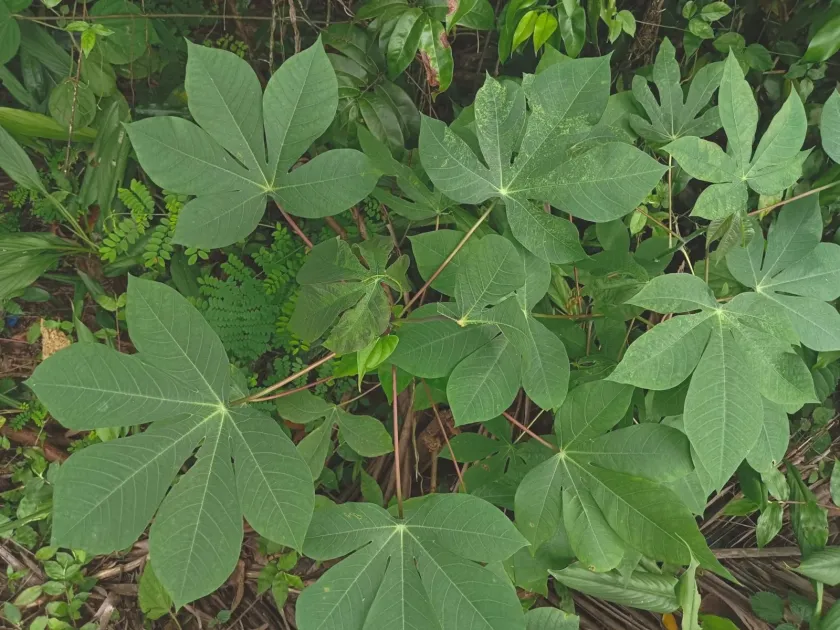
Description
Growing requirements
Manihot glaziovii, commonly known as the Ceara rubber tree, is a perennial plant belonging to the Euphorbiaceae family. It is a robust, fast-growing tree that is historically significant for its production of high-quality latex.
The plant thrives in tropical climates characterized by high temperatures throughout the year. It requires a stable thermal environment, typically ranging between 25°C and 30°C, and is highly sensitive to frost or prolonged cold snaps.
Regarding soil, the Ceara rubber tree is quite adaptable but performs best in well-drained, sandy or loamy soils. It has developed remarkable drought tolerance, making it an excellent candidate for regions experiencing long, dry seasons where other crops fail.
Full sun exposure is essential for the tree's development. Adequate sunlight promotes vigorous vegetative growth and ensures the proper synthesis of rubber particles within the lactiferous vessels of the bark.
Effective management includes regular pruning to maintain tree health and ensure accessible trunks for tapping. Proper spacing between trees is also crucial to ensure adequate airflow and prevent the buildup of humidity, which can lead to fungal issues.
Yield
The yield of Manihot glaziovii is determined by the tree's age, the quality of the soil, and the precision of the tapping technique. Tapping typically commences once the trees reach a sufficient trunk diameter, usually after 4 to 6 years of growth.
High-yielding plantations rely on the selection of superior genetic varieties that demonstrate high latex concentration and fast bark regeneration. Regular, standardized tapping cycles are vital to maintain a sustainable flow of raw material.
The chemical composition of the extracted latex makes it a valuable resource for the rubber industry. Producers often analyze the coagulation properties and purity of the latex to meet industrial standards for further manufacturing processes.
Biomass recovery is another aspect of yield management. After the tree reaches the end of its productive life, the woody matter can be harvested and utilized in local bioenergy or wood-based processing industries, maximizing economic returns.
Consistent monitoring of growth rates allows agronomists to apply corrective measures, such as soil amendments or optimized spacing, to ensure that each tree within the plantation reaches its maximum potential production capacity.
Main diseases and pests
Fungal pathogens represent the most significant threat to the tree, particularly those that infect the bark through tapping wounds. Maintaining sterile tapping tools is the primary defense strategy to prevent the spread of infections.
Various insect pests, including spider mites and certain coleopterans, can severely damage the leaf canopy and young shoots. These pests weaken the tree's overall vigor and can lead to reduced latex production if left untreated.
Bacterial wilt is another concern, especially in regions with poorly drained soils or excessive rainfall. It can spread rapidly through a plantation, requiring strict quarantine measures and the immediate removal of infected specimens.
- Regular inspection of bark integrity.
- Strict sterilization of tapping tools between trees.
- Strategic pruning to increase canopy ventilation.
- Implementation of biological pest control programs.
Integrated pest management (IPM) is the gold standard for protecting Manihot glaziovii. By combining cultural practices, biological agents, and minimal chemical intervention, growers can protect the health of their trees while preserving the surrounding ecosystem.