
Giant wild rye
Leymus racemosus (Lam.) Tzvelev
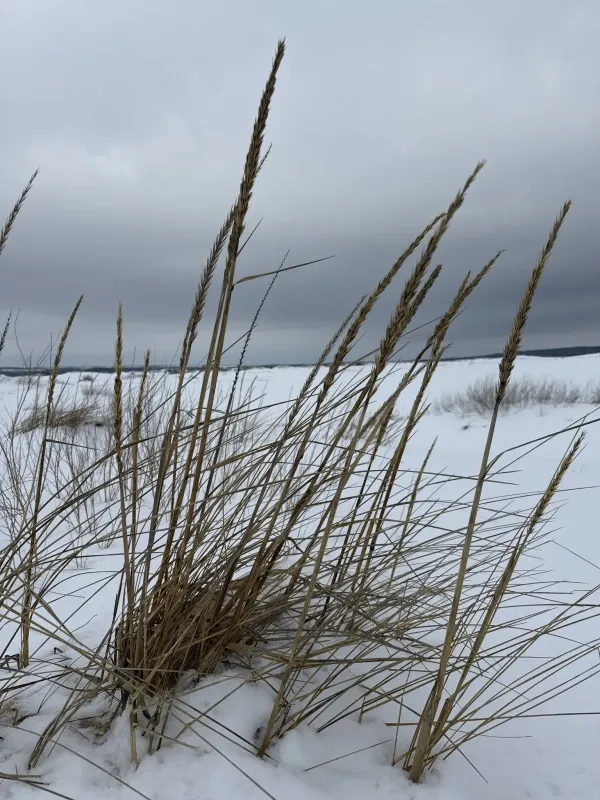
Description
Sowing dates
Giant wild rye (Leymus racemosus) is a hardy perennial grass species belonging to the Poaceae family. It is highly valued for its exceptional biological capacity to thrive in extreme environments, particularly in sandy terrains where most agricultural crops would perish.
Sowing is typically performed in late autumn or early spring to capitalize on soil moisture. Seeds should be buried at a depth of 5 to 7 centimeters to ensure they remain protected from the drying effects of the sun and wind, which are common in its native habitats.
Compaction of the soil after sowing is essential to ensure a tight connection between the seeds and the substrate. This practice improves the capillary rise of water, which is critical for successful germination in dry, sandy conditions.
Seed rates generally range from 10 to 15 kg per hectare, depending on the purpose of the crop—whether it is for stabilizing mobile sands or establishing a forage pasture. Row seeding is the standard method, providing optimal space for root system development.
Vegetative propagation is also highly effective. By planting sections of rhizomes, producers can accelerate the establishment of the grass on shifting dunes. This method is often preferred for soil conservation projects, as it creates a more immediate network of subterranean support.
Growing requirements
The primary requirement for giant wild rye is well-aerated, sandy soil. It thrives on dunes and loose sand deposits, where its rhizomatous root system can expand freely. It is poorly adapted to heavy clay soils or areas with poor drainage and persistent water stagnation.
Drought resistance is one of the most defining characteristics of this crop. Leymus racemosus has evolved to endure extreme arid conditions, using deep roots to access subsurface water, which allows it to maintain growth during periods of severe heat and low rainfall.
Climatically, it is well-suited to regions with large temperature fluctuations. It remains viable through hot, desert-like summers and harsh, cold winters. In colder regions, a consistent snow cover acts as a protective layer, preventing deep frost damage to the root system.
Soil nutrient requirements are relatively low compared to traditional cereals. While it can survive in nutrient-poor sands, light applications of nitrogen-based fertilizers during the establishment phase can significantly speed up the growth of the green biomass.
Long-term success depends on minimizing soil disturbance. Once established, giant wild rye acts as a pioneer species that stabilizes the sand, creating a microclimate that allows for the eventual succession of other beneficial plants in the ecosystem.
Yield
As a forage crop, giant wild rye provides valuable grazing in arid rangelands. Yields of hay can vary significantly based on annual precipitation, typically ranging from 500 to 1,200 kg per hectare in sustainable, non-irrigated production systems.
The nutritional quality is highest during the early vegetative stage. It serves as an excellent source of protein for livestock, including sheep, camels, and horses. However, it must be grazed before the stems become woody and fibrous, which reduces palatability.
Seed production is an important secondary benefit. Harvesting requires careful timing as seeds ripen unevenly. Mechanical harvesting equipment must be adjusted to handle the unique morphology of the seed heads to ensure high germination rates for future seasons.
The primary economic value, however, is derived from its role in land reclamation. By preventing wind erosion and sand drifting, it protects adjacent high-value agricultural fields from encroachment, indirectly preserving the total productivity of the farm operation.
Proper rotation and stocking density are necessary to ensure the longevity of the pasture. Overgrazing can destroy the rhizomes, leading to long-term site degradation. A well-managed grazing schedule allows the plant to recover its energy reserves after each session.
Main diseases and pests
Giant wild rye is inherently robust and exhibits strong resistance to most common cereal diseases. However, in unusually humid years or on sites with excessive moisture, fungal infections such as rust or powdery mildew may occasionally appear on the leaves.
Locusts and grasshoppers represent the most significant threat to young plantations. Large swarms can devastate a new stand of giant wild rye in a matter of days, making regular monitoring and timely pest control essential during the active growing season.
Soil-dwelling pests, including the larvae of various beetle species, can damage the underground rhizomes. While established plants can often tolerate minor root feeding, young or weakened stands may struggle to survive severe infestations.
Invasive weed competition is a major challenge during the establishment year. Weeds can outcompete the slow-growing rye for limited moisture. Effective weed management strategies, such as mechanical cultivation between rows, are vital until the rye reaches full canopy cover.
Human-induced threats, particularly excessive trampling or improper machinery operation, can damage the delicate root-sand interface. Careful site management and restricting heavy traffic are crucial to maintaining the structural integrity of the sandy soil surface.