
Sand ryegrass
Leymus arenarius (L.) Hochst.
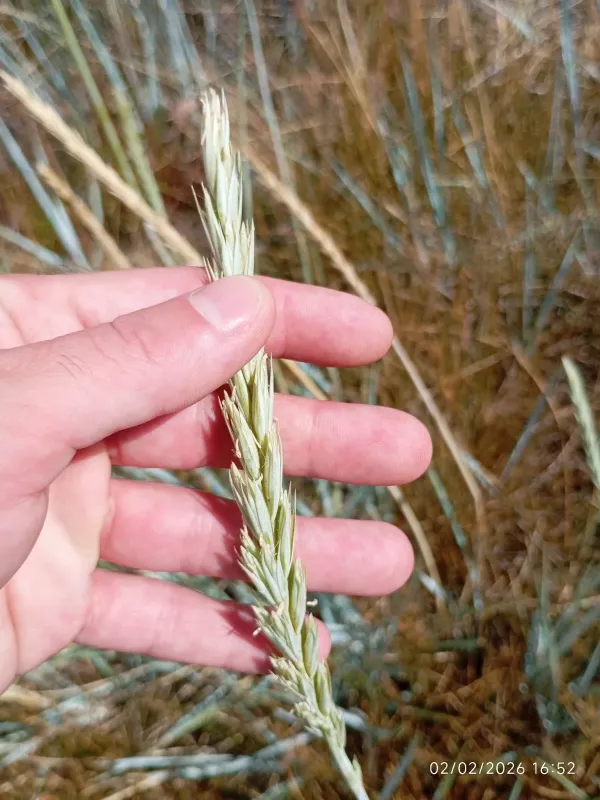
Description
Sowing dates
Sand ryegrass is a resilient perennial grass belonging to the Poaceae family, widely recognized for its ability to thrive in challenging, sandy coastal environments.
The optimal time for sowing is during the early spring season, which allows the seeds to take advantage of soil moisture and cool temperatures for better germination.
It is recommended to sow seeds at a shallow depth of approximately 3 centimeters, ensuring they are covered just enough to remain protected from wind erosion while being able to sprout.
Proper seedbed preparation is crucial; rolling the soil after sowing can significantly improve seed-to-soil contact, which is essential in loose, sandy substrates.
In addition to direct seeding, the species can be propagated through rhizome cuttings, which is often a more reliable method for large-scale dune stabilization projects.
Growing requirements
The plant has a unique physiological adaptation that allows it to tolerate poor, nutrient-deficient soils, making it an ideal choice for land reclamation.
It thrives in full sunlight and is highly intolerant to deep shade, which must be considered when selecting a site for cultivation or restoration purposes.
While the plant is exceptionally drought-tolerant once established, it requires sufficient moisture in its initial stages to develop a strong, deep root system.
Tolerance to salinity and strong winds makes Sand ryegrass a primary candidate for coastal landscape management and erosion prevention in harsh maritime climates.
Minimal fertilization is generally sufficient for maintenance; however, a balanced nitrogen application in the second year can boost biomass production considerably.
Main diseases and pests
One of the primary benefits of Sand ryegrass is its natural resistance to many common fungal and bacterial infections that plague typical agricultural crops.
However, under conditions of poor drainage or persistent high humidity, leaf rust may occur, which can impact the overall vigor of the plant population.
Pest pressures are generally low, although aphids may occasionally colonize tender shoots during a wet spring, requiring observation if the stand is for seed production.
Sustainable management involves maintaining the health of the stand through proper thinning if the density becomes too high, which promotes airflow and disease prevention.
In cases of severe infestation, using approved biological control agents is the preferred method to maintain the ecological balance of the restored dune or field.
Harvesting
The primary utility of Sand ryegrass is centered on its role as a stabilizer of sand dunes, where its intricate root network holds the soil in place against wind and water.
While not a primary forage crop due to its coarse texture at maturity, young growth can be used as emergency feed for livestock in regions with limited vegetation.
Seed harvesting should be performed carefully once the seeds reach their physiological maturity, usually signaled by a change in the color of the spikes to a tan shade.
In industrial applications, the dried biomass can be utilized in the production of high-quality paper or as a sustainable material for traditional handicraft production.
Post-harvest management is important for sustainability; leaving the root systems intact ensures that the field remains protected against erosion throughout the winter months.