
Sherard's mallow
Malvella sherardiana
Description
Growing requirements
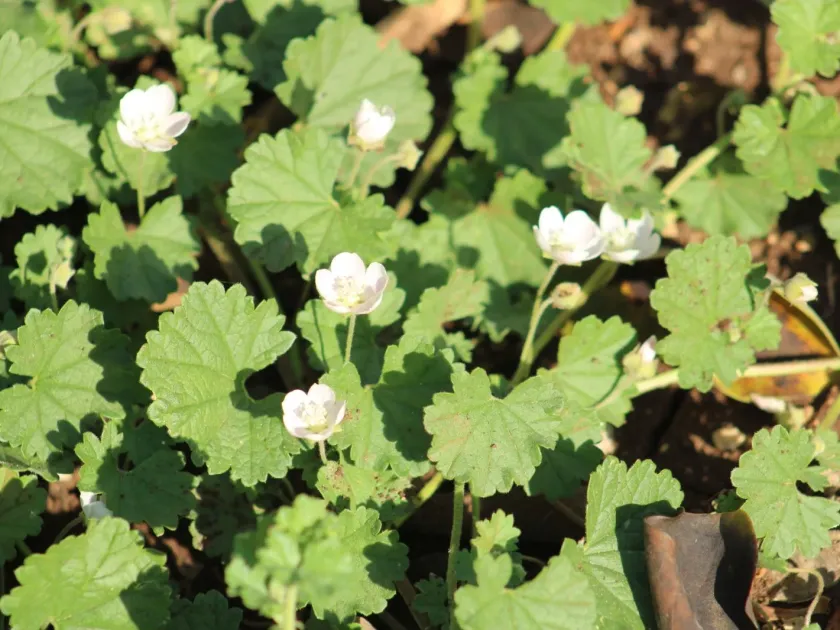
Sherard's mallow, known scientifically as Malvella sherardiana, is a perennial herbaceous plant belonging to the Malvaceae family. It is distinguished by its low-growing, prostrate habit and greyish-green foliage covered with fine stellate hairs.
The native range of this species extends across Southern Europe, the Caucasus, and parts of the Middle East. It thrives in arid and semi-arid environments, favoring open, dry habitats such as stony slopes, steppe plains, and neglected lands where soil moisture is often limited.
Ecologically, the plant is highly adapted to high solar radiation and periodic water scarcity. It prefers well-drained soils, including rocky or gravelly textures, and possesses a robust taproot system that allows it to access deeper soil moisture layers during dry summer months.
The growth cycle of this species is tied to temperature fluctuations, with active development occurring in spring and early summer. It exhibits a remarkable resilience to both high heat and low nutrient availability, which characterizes its competitive strategy in harsh environments.
While not a primary commercial crop, Malvella sherardiana holds botanical value as a potential genetic resource for drought-tolerant breeding programs within the mallow family. Its ability to stabilize loose soil surfaces also gives it a role in environmental restoration projects.
Main diseases and pests
Common pests affecting Sherard's mallow include various species of aphids and spider mites, which can proliferate during prolonged hot and dry spells. These pests typically congregate on the undersides of leaves or tender shoots, weakening the plant.
Fungal pathogens such as powdery mildew are the most frequent health threats, especially in areas with stagnant air or unseasonable humidity. Proper sanitation and ensuring adequate air circulation around the plant clusters are essential for mitigating these issues.