
Thompson's Magnolia
Magnolia thompsoniana
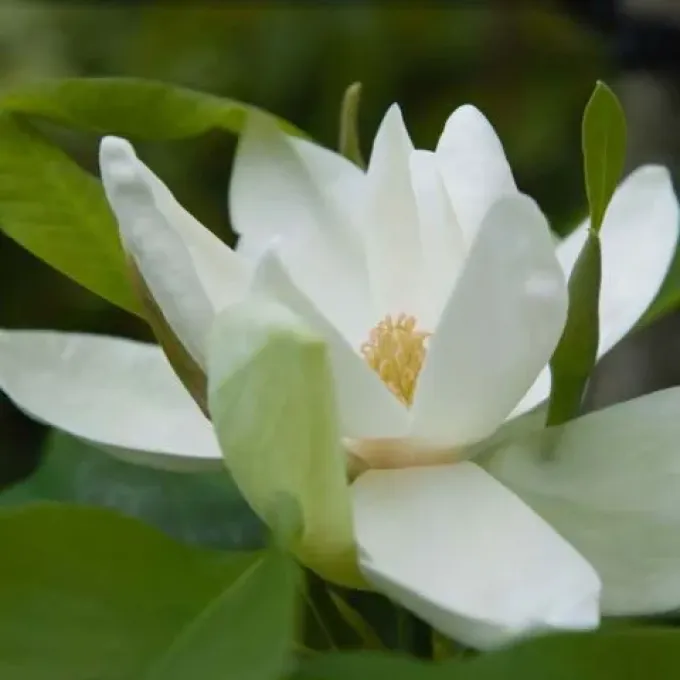
Description
Growing requirements
Thompson's Magnolia (Magnolia thompsoniana) is a hybrid plant within the Magnoliaceae family, originating from a cross between M. virginiana and M. tripetala. It is highly valued for its elegant form, large leaves, and sweetly fragrant flowers that bloom during the summer months.
Successful cultivation requires a location with partial shade or filtered sunlight, as intense direct sun can scorch the foliage. The soil must be acidic, well-draining, and consistently moist, as this species does not tolerate drought or heavy, waterlogged clay soils.
Regarding climate, the plant prefers temperate conditions with high ambient humidity. While it possesses some cold hardiness, young plants should be protected during their first few winters to ensure successful establishment and prevent tip dieback.
Cultural practices include the frequent application of organic mulch to keep roots cool and maintain soil acidity. Fertilizing with an acid-loving plant formula in early spring is recommended to encourage vigorous growth and flower production.
In landscaping, this magnolia is primarily used as a feature plant in residential gardens or as part of a woodland-style border. Its relatively compact size makes it suitable for gardens where space is somewhat limited but high aesthetic value is desired.
Main diseases and pests
Like many species in the genus, Thompson's Magnolia can be susceptible to fungal diseases such as leaf spot and powdery mildew, especially in environments with poor air circulation or excessive moisture.
Pests including scale insects and spider mites may occasionally infest the plant. These organisms typically thrive in hot, dry conditions and can cause significant foliage damage if left untreated.
Prevention is key, involving regular sanitation to remove dead or diseased branches and ensuring that the tree is not overcrowded by surrounding vegetation.
If symptoms of chlorosis appear—characterized by yellow leaves with green veins—this typically indicates an iron deficiency caused by high soil pH, which should be corrected with soil amendments.
Integrated pest management, including the use of horticultural oils or targeted insecticides, is recommended when pest populations reach a threshold that threatens the overall vitality of the magnolia.