
Willow-leaved magnolia
Magnolia salicifolia
Description
Sowing dates
The propagation of Magnolia salicifolia is achieved primarily through seeds or softwood cuttings. Seeds should be sown in autumn immediately after collection, followed by stratification for several months to break dormancy.
Cuttings are harvested in mid-summer from healthy, semi-hardwood growth. Successful rooting requires a high-humidity environment, such as a greenhouse, along with a well-draining perlite-peat substrate.
Transplanting young saplings requires extreme caution due to the tree's fleshy, sensitive root system. It is best to plant the tree in its permanent location while it is still relatively young to avoid future damage.
Selecting the right site involves finding a location that provides protection from cold winds and strong afternoon sun. The soil must be prepared with sufficient organic matter to ensure healthy root development.
Maintenance during the establishment phase includes consistent watering, especially during dry spells. Proper mulching around the base of the tree is essential to preserve soil moisture and regulate temperatures.
Growing requirements
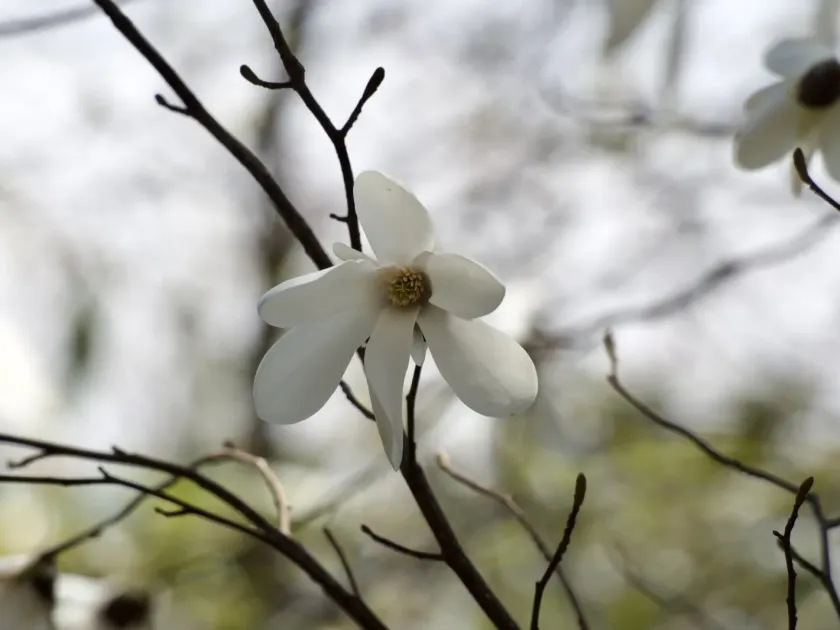
Magnolia salicifolia, a member of the Magnoliaceae family, is a deciduous tree native to the forest regions of Japan. It is highly valued for its elegant, willow-like foliage and fragrant white spring flowers.
This species thrives in moist, acidic to neutral, and well-drained soils. It is particularly sensitive to alkaline soil conditions, which can lead to chlorosis and stunted growth throughout the growing season.
Climate preferences include regions with mild winters and humid summers. Although the tree is hardy, protection from harsh, drying winds in early spring is necessary to prevent bud and foliage damage.
Adequate sunlight is required for optimal flowering, although the tree can tolerate partial shade in warmer climates. It possesses a naturally upright, slender habit, making it suitable for specimen planting.
Fertilization with balanced, acid-loving plant formulas should be applied in early spring. Avoid heavy pruning, as this magnolia prefers to grow naturally; only dead or crossing branches should be removed.
Main diseases and pests
Common pests affecting the willow-leaved magnolia include scale insects and spider mites. These can cause leaf yellowing and reduced vigor, requiring timely application of horticultural oils or insecticides.
Fungal diseases like powdery mildew and leaf spots may occur in environments with poor air circulation. Thinning the canopy and ensuring the foliage dries quickly after rainfall are vital preventative steps.
Physiological issues, primarily iron chlorosis, are common in soils with an incorrect pH balance. This condition weakens the tree and significantly diminishes its visual appeal, requiring treatment with iron chelates.
Winter damage from cold, desiccating winds can lead to branch dieback. Protecting young trees with burlap wraps or windbreaks during extreme cold events is highly recommended to ensure survival.
Root rot caused by poor soil drainage remains a major threat to the tree's long-term health. Always verify the drainage capacity of the planting site before installing this species in the garden.